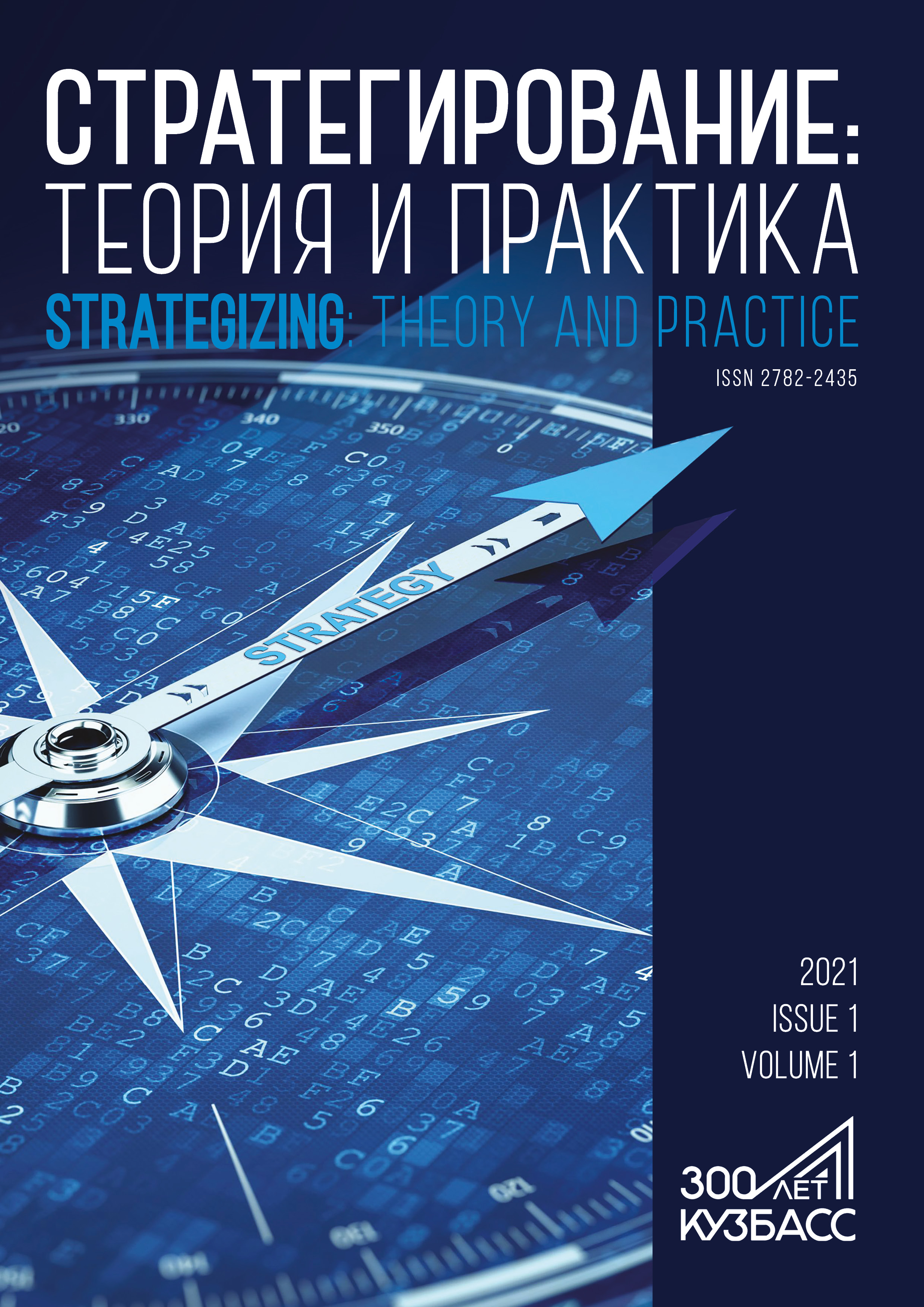
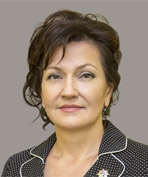
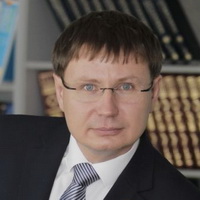
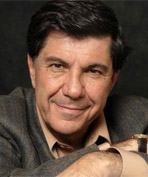
Обложка журнала
Title (English)
STRATEGIZING: THEORY AND PRACTICE
Language of publication
Russian, English
ISSN
2782-2435 (print) 2782-2621 (online)
Periodicity (English)

Published 4 times per year.

Russian science citation index:
Yes 77131

Before submission, please check your manuscript for validity, readability, concise presentation, and formatting. Make sure your conclusions are well-grounded and the research materials are novel.

Proofread your manuscript: although all submitted articles undergo thorough editing, the Editorial Board has the right to reject a badly written manuscript that does not meet the formatting requirements.

The article body should be 10 – 12 pages (including the abstract, figures, and tables) in MS Word, i.e. 40,000 characters with spaces. A review article has an unlimited wordage.

Generate separate files for tables and figures.

Format instructions:

  • 20 mm margins;
  • single line spacing without automatic hyphenation;
  • no extra interspaces between words or gaps between paragraphs;
  • Times New Roman, size 12;
  • ≤ 3 figures, ≤ 4 tables (Times New Roman, size 12)

Structure: Each article sent to the Journal should be structured as described below:

0. In the upper right corner, state the type of manuscript: research paper, review, scientific report, news item, informational or publication, etc.

1. In the upper left corner, type in the Universal Decimal Classification of your research or JEL classification.

 2. Title (<10 words>) in Russian, English, it should be informative and reflect the main results of the research. Please avoid abbreviations. Only the first letter is capitalized, the rest of the words are lowercase, except for proper names and titles.

3. Initials and last names of the authors, separated by commas. Spelling should coincide with ORCID ID. Mind that all authors should have an ORCID profile. Please mark the name of the author responsible for correspondence with an asterisk (*) and give their e-mail address.

4. Affiliations: formal name of the institution, city, and postal address with postal code. The names and locations of institutions or companies should be given for all authors. If several institutions are listed on a manuscript, it should be clearly indicated with which department and institution each author is affiliated by using corresponding superscript numbers.

5. Abstract (200 – 250 words): it cannot exceed 2,000 characters with spaces. The abstract should be original and reflect the main results and novelty of the article. The best way to structure your abstract is to let it follow the structure of the article itself: introduction, study objects and methods, results, and conclusions. Concentrate mainly on the results: mention the main theoretical and experimental results, actual data, discovered interconnections, and regularities. Give preference to new results and long-term data, important discoveries, practical importance, and conclusions; avoid meaningless introductory phrases and vague, general statements. Make sure your abstract contains keywords. Do not paragraph your abstract. Numerals are transmitted in numbers unless the sentence starts with one. You are free to use generally accepted abbreviations: the first time you use an abbreviation in the text, present both the spelled-out version and the short form in parenthesis after it. If there are many abbreviations, make a glossary at the end of the article.

6. Keywords (≤10) in Russian, English: keywords that identify the subject of the manuscript and facilitate computer-based search. Use Thesaurus.com, CABThesaurus, Multitran.com, if necessary. 

7. Funding: indicate how the research and the publication of this article were funded. If the study was performed with the support of a grant, specify the number of the grant and its title. State the name of your employer if the study was performed as part of your routine work and did not receive additional funding. The funding section is optional: feel free to omit it if your research had no financial support.

8. The body of your article should include the following sections:

8.1. Introduction (1/5 of the text): this part states the problem, describes goals and objectives, gives a brief review of the international publications related to the matter, and proves its relevance. In-text references should be given in square brackets and numbered [beginning with №1] in order of their appearance in the text. Make sure your introduction reflects the objectives of your research.

8.2. Study objects and methods (1/5 of the text)

8.3. Results and discussion (3/5 of the text, including the Conclusion): this section should provide a concise description of experimental data. Rather than repeating the data of tables and graphs, the text should seek to reveal the principles detected. It is recommended to use the past indefinite verb tense in describing the results. The discussion should not reiterate the results; as a rule, this section interprets the research results, checks their correspondence to the hypothesis, generalizes the data, contains proposals for practical application, outlines future research, etc.

8.4. Conclusion: briefly summarize the main results of your research. Naturally, the conclusion should contain the answer to the question posed by the introduction.

9. Authorship and Contribution: specify the contribution of each author of your manuscript. 

10. Conflicts of interests: this section indicates a real or potential conflict of interests. If there is no conflict of interests, you should write that “the author declares that there is no conflict of interests regarding the publication of this article”.

11. Acknowledgements: this section is optional and contains an expression of gratitude to those who contributed to the research.

12. References:

References should be listed and numbered in order of their appearance in the article. Use a number in square brackets when citing references in the text.

It is not recommended to use more than 3 references to web resources.

Please avoid citing publications that are more than 10 years old.

Please make sure that at least 80% of the works you cite are less than 5 years old; 50% of the referenced sources should be published in periodicals registered in Scopus, Web of Science, etc. You might want to consult the list of leading periodicals on «Strategy and management». Indicate DOI, if available.

Self-citation should be well-justified and cannot exceed 10% of the references.

Unpublished works, textbooks, and conference proceedings are not referenced.

Zero references to foreign authors or very recent sources (2-3 years old) reduce your chances. Make sure that your reference list reflects the real contribution of domestic and foreign scientists to the problem you write about.

The Russian reference list follows State Standard  P 7.0.5-2008  «Bibliographic record. Bibliographic description. General requirements and rules for compiling».

Use Vancouver style for Non-Russian sources (consult EndNote or Mendeley). Multiple authors are listed separated by commas, unless there are more than six authors, in which case mention the first six authors, then add “et al.”  Only the first letter of the first word in the title is capitalized. Capitalize any proper nouns and certain other types of words but use lowercase for everything else. Do not abbreviate the titles of journals. Start the imprint with the publication year, then give the number of the volume after a semicolon without spaces. After that, specify the issue number in parenthesis, put a colon, and give page numbers. DOI reference comes last, if available.

For Russian-language sources, use automatic transliteration systems and translators: to translate the Cyrillic alphabet into Latin, use free transliteration programs (http://www.translitteration.com, http://www.law.net.ru/translit, etc.) that follow the Board of Geographic Names (BGN) system.

Formulas and Figures: Formulas and illustrative material are part of the body of the article.

Mathematical equations should be typed in the Equation (Math Type) formula editor or in MS Word as a whole unit. Use default font settings, no manual changes of symbols or elements are allowed.

Tables: Tables are created in Word (Table – Add Table) or MS Excel, placed in the text of the manuscript or in the appendix, and numbered in the order of their appearance in the text in Arabic numerals.

Each table (≥ three columns) must have a number and a heading in Russian and English. All columns must have titles and be separated by vertical lines. Do not use abbreviations.

Figures: Figures and diagrams, preferably colored, should be made in Microsoft Office or Corel Draw. Please make sure the figures can be improved by the editors if necessary. E-mail each separately as a tiff, jpeg, cdr, or excel file.

Number them in the order of appearance in Arabic numerals and give captions about the source of the illustrative material in Russian and English.

The Editorial Board of the Strategizing: Theory and Practice is guided by the principles of publication ethics, developed on the basis of international standards:

Provisions developed by The Committee on Publication Ethics (COPE);

The Elsevier Publishing Ethics Resource Kit;

A decree issued by the Society of Science Editors and Publishers.

1. Editorial Board

The editorial policy of the Journal is based on respect for the copyright.

The Editorial Board ensures independent and conscientious consideration of all submitted manuscripts, without prejudice to the ethnic, religious, or social status of their Authors and regardless of any commercial interests and relations with the Publisher.

The Editorial Board shall decide on the acceptance or rejection of publications based on the results of the inspection for compliance with the registration requirements and the review results. The Editorial Board shall inform the author about the decision and explain it.

The Editorial Board has the right to reject a badly written manuscript that does not meet formatting requirements or contains evidence of slander, plagiarism, or copyright infringement. The final decision on the publication of an article or refusal of such is accepted by the Chief Editor and is fair and unprejudiced.

All manuscripts are checked for unauthorized borrowings from open sources, i.e.plagiatrism, via www.antiplagiat.ru. Should multiple unauthorized borrowings be detected, the Editorial Board follows the COPE algorithm.

The Editorial Board ensures the confidentiality, which means that the submitted manuscript cannot be demonstrated to anyone other than the respective authors, reviewers, other editorial advisers, and the publisher.

The Editorial Board ensures that the materials of the rejected manuscript will not be used in the board members’ own research without the written consent of the author.

The Editorial Board shall promptly examine each complaint about any possible unethical behavior of the Authors of submitted and published articles and undertake appropriate measures. Should the unethical behavior be proved, the Editorial Board has the right to refuse to publish the article, cease further cooperation with the author, publish a retraction, or take other necessary measures to further curb the unethical behavior of the author in question.

Should an error be detected, amendments can be provided as soon as possible. When the online version of the article is corrected, it is provided with the correction date and a reference to the errata published.

2. Editors

The Editors are responsible for the publishing decisions to the authors, reviewers, readers, scientific community, the founder, and the publisher. They shall make objective decisions regardless of commercial considerations and ensure an honest and efficient peer review.

The Editors promise not to disclose information about the manuscript prior to publication.

The Editors do not work with manuscripts they have a conflict of interests about.

The Editors shall make every effort to resolve any conflict situation, should one arise.

The Editors publish corrections, refutations, and reviews of articles, if necessary.

They cannot publish the final version of the manuscript without authors’ consent.

3. Reviewers

The Editorial Board guarantees a confidential, independent, honest, and objective review of all manuscripts. The Editorial Board has the right to reject a manuscript before the review stage, if it has been found to be of poor quality or does not meet the requirements of the Journal. This decision is made fairly and impartially.

The Chief Editor appoints acknowledged academic specialists in the specific sphere with no conflict of interests.  The expert evaluation of the manuscript promotes the adoption of editorial decisions and also helps the author improve the manuscript.

Based on the review, the editorial board makes a decision to accept the manuscript for publication, return it to the author for revision, or reject it.

The Reviewers shall provide a review within the time specified by the editors or notify the editor if the deadline is impossible.

The Reviewers shall provide an objective peer review. Any personal criticism of the Author is unacceptable. All the conclusions should be well-grounded and provided with links to authoritative sources.

Should the Reviewer detect that the manuscript was based on other studies which the author failed to mention in the references, the Reviewer shall inform the Editor about it. Reviewers are obliged to inform the Editor about any resemblance or overlap between the manuscript under consideration and other previously published researchers.

The Reviewers have no right to use unpublished manuscript materials in their own research without the written consent of the author.

The Reviewers cannot examine the manuscript if they find themselves unqualified or biased, or in case a conflict of interests arises because of competitive, cooperative, or other relationship with the author or organization related to the research.

If the Reviewer raises the issue of the accuracy of the data or the advisability of publication, the Author is given an opportunity to respond.

Independent peer Reviewers are informed about the requirements or any changes in the editorial policy.

The Editors do not reveal any personal data concerning the Reviewers.

4. Authors

The Authors shall guarantee that the submitted manuscript contains authentic results that have never been published and are not being reviewed by other journals.

The Authors must disclose any conflicts of interests that could affect the evaluation and interpretation of their manuscript.

If the materials are available on the Internet, the Authors are obliged to notify the Editors and provide a link to the preprint.

The Authors ensure that the list of authors includes only those individuals who have made significant contributions to the work, and that no researcher deserving authorship has been excluded from the list of authors.

The Authors guarantee that the manuscript they submit meets the formatting requirements, including those for the illustrative material.

The Authors are required to refer to other studies as correctly and accurately as possible by specifying the original source in the references. A word-to-word citation or periphrasis of the Author’s own publications is unacceptable: they can only be used as a basis for the new findings.

The Authors cannot copy references from other publications if they are not familiar with the original source. Quotes and references must be accurate and formatted in accordance with the requirements.

The Authors must follow the applicable laws on copyright protection. Materials protected by copyright, e.g. tables, figures, or large citations, may be reproduced only with the permission of their respective owners.

The Corresponding Author is responsible for communication with the editors, guarantees that all requirements of the Journal are met, promptly answers any questions, and provides the necessary information. The Corresponding Author cannot make decisions alone.

The Corresponding Author shall guarantee that all the co-Authors have seen the final version of the manuscript, approved it, and agreed to its submission for publication.

The sources of financial support for the project (grants, state programs, projects, etc.) are to be indicated in the manuscript.

The Authors are required to immediately notify the Editor in the event of an error in any work filed by them for publication, accepted for publication, or already published, and contribute to its correction. Should the Editor be informed about an error by third parties, the Authors are to promptly correct the error or justify it.

Any change in the team must be confirmed by the written consent of all authors.

The Authors agree that their article will be sent for blind review and undertake to cooperate with the editors to improve, shorten, or supplement their article in accordance with the review, as well as to correct the indicated inaccuracies.

5. Publisher

The Publisher supports scientific communication, invests in the publication, and adheres to all current publishing guidelines.

The Publisher has no influence on the Editorial Policy of the Journal.

The Publisher provides legal support to the Editorial Board, if necessary.

The Publisher is responsible for the timely release of the issues.

The Publisher publishes edits and clarifications, as well as retracts articles that violate scientific ethics or contain critical errors.


6. Retraction

Retraction of a published article is considered to be the last resort in case previously unknown facts were revealed after the review stage. In this case, the Editorial Board follows the COPE algorithm and the Decree issued by the Society of Science Editors and Publishers.

Retraction can be initiated by Authors, Readers, Reviewers, Editors, or Publisher by appealing to the editorial board.

The Editors start the retraction procedure if:

• there is clear evidence that the published information is unreliable, either as a result of deliberate actions, e.g., data falsification, or accidents, e.g. faulty calculations or experiments);

• a duplicate publication is about to occur, i.e. the findings have been previously published, and there is no proper reference or authorization for re-publication;

• the article is plagiarized;

• the article describes unethical research.

The main purpose of the retraction is to correct the published information and ensure its integrity, not to punish the Authors who committed violations.

Retraction procedure:

Retraction can be initiated by Authors, Readers, Reviewers, Editors and Publishers by an appeal to the Editorial Board.

The Committee on Conflict Resolution considers the appeal.

The Committee on Conflict Resolution confirms the retraction of the published article if they find sufficient facts in favor of the retraction.

The Committee on Conflict Resolution notifies the initiator about the results.

The Journal publishes a note of retraction indicating the metadata of the article in question.

The Editors notify databases about the retraction and its reasons.

7.  Committee on Conflict Resolution

Violation of publication ethics requires a mandatory investigation, be it the fault of Publisher, Editors, Chief Editor, Reviewers, or Authors. This applies to both published articles and unpublished manuscripts. The Editorial Office calls a Committee on Conflict Resolution to resolve issues and complaints related to possible violations of the principles of Editorial Ethics. The chairman and members are appointed by voting from the members of the editorial board. The Committee on Conflict Resolution considers complaints from Authors, Readers, Reviewers, Editors, and Publisher.

8. Copyright

The Author owns the exclusive rights for the manuscript.

For the manuscript to be published and distributed, the Author transfers exclusive rights to use it to the Publisher by signing the Copyright Agreement, while retaining significant rights for use and distribution.

The Publisher respects and supports the Authors in their aspiration to bring the value of the research to the scientific community.

Under the Copyright Agreement, the Author transfers the copyright to the Publisher but reserves the right to:

• use the article for personal purposes, within their organization and for the purpose of scientific exchange, as long as there is a reference to the published version;

• patents, trademarks, and other intellectual property (including primary research data)

• proper attribution and source of published work.

Under the Copyright Agreement, the Author grants the Publisher the following rights:

• the exclusive right to publish, distribute the article, and grant rights to a third party, including for commercial purposes;

• the right to reproduce the article in any format and media (including digital);

• the right to protect copyrights in the event of their infringement by a third party.

 Copyright protection

The exclusive right to use the article belongs only to the Author or copyright holder (Publisher). Any use without their consent (except for use for scientific, educational, cultural and other purposes stated in Art.1274 of the Civil Code of the Russian Federation) is a violation of copyright.

The Publisher shall take all necessary measures to protect copyright.

Strategizing: Theory and Practice publishes authentic research articles, reviews, short scientific reports, news, and information summaries related to the topic of strategizing.

Authors are responsible for the scientific content of the manuscript and the accuracy of the information. By submitting your manuscript, you confirm that it is original and previously unpublished in Russian or other languages.

Authors are fully liable in accordance with the current legislation for any violation of intellectual property and copyrights.

You can publish an initial draft of your manuscript on non-commercial and publicly available preprint servers, e.g. bioRxiv, arXiv, or related repositories. Do not forget to inform the Editorial Board before submission and provide a link to the preprint. After your manuscript has been edited according to the review and published in the Journal, you cannot post it on any preprint servers lest it should be regarded as a duplicate publication. When citing your article after publication, please make sure to add an active link to the website of the Journal.

The Corresponding Author is responsible for communication with the editors, guarantees that all requirements of the Journal are met, promptly answers any questions, and provides the necessary information.

The Corresponding Author shall guarantee that all the co-Authors have seen the final version of the manuscript, approved it, and agreed to its submission for publication.

Authors guarantee that the manuscript they submit meets the formatting requirements. The Editorial Board has the right to reject a badly written manuscript that does not meet the formatting requirements.

If the manuscript meets the profile and the formatting requirements, it is registered by the Editor, who then contacts the Author within 14 days.

All manuscripts are checked for unauthorized borrowings from open sources, i.e. plagiatrism, via www.antiplagiat.ru. Should multiple unauthorized borrowings be detected, the Editorial Board follows the COPE algorithm.

After that, the manuscript goes to the Chief Editor, who assesses its topic, scientific character, reliability, validity, representativeness, completeness, coherence, language, style, and implementation of the research objective. The Chief Editor then appoints two reviewers for a double-blind peer review, which means that the authors do not know the reviewers and the reviewers do not know the authors. Reviewers guarantee objectivity, anonymity, and confidentiality and consider the possibility of a conflict of interests.

The double-blind peer review can be conducted by the members of the Editorial Board or by acknowledged academic specialists (doctors, professors) in the specific sphere, who have had recent publications on the related topic.

Each Reviewer uses the following criteria to accept a manuscript for publication: relevance, novelty, and significance; type of the article and its contents; compliance with the subject of the Journal; use of strategizing methodology; clarity of presentation; reliability of the results and the completeness of the conclusions; title, abstract, and references. After that, each Reviewer makes a reasoned conclusion: to recommend the manuscript for publication / to recommend the article after revision / NOT to recommend the manuscript for publication.

If at least one of the Reviewers claims that the article has to undergo a considerable revision, it will be returned to the same Reviewer for the second check-up after it has been improved by the Author. The manuscript can be rejected after two negative reviews. In this case, the Author receives a substantiated refusal or a copy of the review. The Reviewer's name may be reported to the author only if the Reviewer gives consent to it.

Papers accepted for publication are published in priority sequence, according to the acceptance date. In exceptional circumstances, the Editors retain the right to change the publication order.

The content of the issue is approved by the Chief Editor. All manuscripts undergo stylistic and grammatical editing. The layout of the manuscript is sent to the Author for final confirmation.

The journal only publishes the manuscripts recommended by the reviewers.

«Double-blind» peer review.

The reviewer is appointed by the editor-in-chief or the deputy editor. Both the members of the editorial board and highly qualified scientists and specialists from other organizations and enterprises can be invited for reviewing manuscripts.

They have to have profound professional knowledge and experience of work in the specific field of science and be doctors of sciences and professors.

The reviewers are notified about the manuscripts being the authors' private owner rights and not being subject to public disclosure. The reviewers are not allowed to copy the articles for their private needs. Reviewing is performed confidentially. Violation of confidentiality is impossible unless the reviewer declares unreliability or counterfeiting of the article's materials.

The term for the article consideration should not exceed three months from the date of starting the reviewing process.

If the reviewer points out, that improvement is necessary the article is sent to the author for follow-on revision. In this case the return date of the modified article is considered the date of the article submission.

If, on the recommendation of the reviewer, the article underwent a considerable revision by the author, it is again sent to the reviewer who gave the critical remarks. The editorial board reserves the right to reject the articles in case of the author's inability or unwillingness to take into account the editor's recommendations.

In case of two negative manuscript reviews from different experts or one negative review on the article's modified variant it is rejected without considering by other members of the editorial board. After reviewing the possibility of publication is decided upon by the editor-in-chief or, in case of necessity, by the editorial board altogether.

The author of the rejected article is sent a motivated refusal by the official responsible for issuing. The reviewer's name may be reported to the author provided that the former gives consent to it.

Reviews' originals are kept by the editorial board during five years since the publication.

Authors do not have to pay any article processing charge or open access publication fee.

Kvint Vladimir  — Chairman of the International Editorial Board
Lomonosov Moscow State University (The Moscow School of Economics, The Chair of Economic and Financial Strategy, Head of chair)
doctor of economic sciences
Academic rank Honored Fellow of Higher Education of the Russian Federation ,
Annual Lomonosov Prize in Science of Highest Degree ,
Public Award Economic Book 2022 for the monograph on the Strategy of Kuzbass in nine volumes ,
State Award of the Republic of Uzbekistan for Achievements in Science and Technology for the scientific monograph on the Strategic Leadership of Amir Timur: Comments on the Code ,
Holder of the Order of Alexander Nevsky for Contribution to Scientific Research and Education
professor ,
academician Russian Academy of Sciences
Moscow, Moscow, Russian Federation
Akaev Askar  — Member of the International Editorial Board
National Research University Higher School of Economics
doctor of physical and mathematical sciences
Academic rank Foreign Member of the Russian Academy of Sciences
professor
Moscow, Russian Federation
Akhmetova Irina  — Editorial board member
Kazan State Power Engineering University
doctor of technical sciences
professor
Kazan, Kazan, Russian Federation
ORCID: 0000-0002-7082-2005
Bakhtizin Albert  — Editor-in-Chief
Central Economics and Mathematics Institute of the Russian Academy of Sciences
doctor of economic sciences
corresponding member Russian Academy of Sciences ,
professor
Moscow, Moscow, Russian Federation
Bodrunov Sergey  — Editorial board member
S.Yu. Vitte Institute of New Industrial Development (director)
doctor of economic sciences
professor
St. Petersburg, Russian Federation
Bystrov Andrey  — Editorial board member
Plekhanov Russian University of Economics
doctor of technical sciences
Moscow, Russian Federation
ORCID: 0000-0002-9519-8210
Dar’kin Sergey  — Editorial board member
PAO Tikhookeanskaya Investitsionnaya Gruppa (Pacific Investment Group, PJSC) (President)
candidate of economic sciences
Moscow, Russian Federation
Kozyrev Aleksandr Aleksandrovich  — Editorial board member
North-West Institute of Management of the Russian Presidential Academy of National Economy and Public Administration (kafedra menedzhmenta, Associate Professor)
candidate of economic sciences
St. Petersburg, Russian Federation
Leukhova Maria  — Editorial board member
Kemerovo State University
candidate of historical sciences
Academic rank Honored Fellow of Higher Education of the Russian Federation
docent
Kemerovo, Kemerovo, Russian Federation
Makarov V.  — Editorial board member
Central Institute of Economics and Mathematics of the Russian Academy of Sciences (Research Director)
doctor of physical and mathematical sciences ,
candidate of economic sciences
academician Russian Academy of Sciences ,
professor
Moscow, Russian Federation
Nie Yongyou  — Member of the International Editorial Board
Shanghai University (School of Economics, Dean)
professor
Shanghai, China
Novikova Irina  — Deputy Editor-in-Chief
Moscow School of Economics of Lomonosov Moscow State University (Department of Economic and Financial Strategy, Professor)
doctor of economic sciences
Moscow, Moscow, Russian Federation
Okrepilov Vladimir  — Editorial board member
Institute of Regional Economics of the Russian Academy of Sciences (Scientific Director)
doctor of economic sciences
professor ,
academician Russian Academy of Sciences
St. Petersburg, Russian Federation
Pahomova Elena Alekseevna  — Editorial board member
Institute for the Development of Territorial Systems of Professsional Teachers’ Training of the Russian State Pedagogical University (Department of Professsional Teachers’ Training, prof.)
doctor of pedagogical sciences
Kemerovo, Kemerovo, Russian Federation
Prosekov Alexander  — Editorial board member
Kemerovo State University
doctor of technical sciences
Kemerovo, Russian Federation
SPIN: 5203-5725 ORCID: 0000-0002-5630-3196
Rastvortseva Svetlana  — Editorial board member
National Research University Higher School of Economics
doctor of economic sciences
professor
Moscow, Russian Federation
ORCID: 0000-0002-1599-359X
Sapir Jacques  — Member of the International Editorial Board
Centre for the Study of Industrialization Pattern (CEMI) - Foundation Robert de Sorbon (director)
Academic rank Foreign Member of the Russian Academy of Sciences
Paris, France
Ugras Yusuf Joseph  — Member of the International Editorial Board
La Salle University (College of Professional and Continuing Education, Dean)
doctor of economic sciences
professor
Philadelphia, United States of America
Fadeev Aleksey  — Editorial board member
Luzin Institute for Economic Studies – Subdivision of the Federal Research Centre “Kola Science Centre of the Russian Academy of Sciences”
doctor of economic sciences
Apatity, Russian Federation
Khvorostyanaya Anna  — Editorial board member
Lomonosov Moscow State University
candidate of economic sciences
Moscow, Moscow, Russian Federation
ORCID: 0000-0003-4421-3705
Scholte Jan Aart  — Member of the International Editorial Board
Leiden University (Institute of Security and Global Affairs, Professor of Global Transformations and Governance Challenges)
Leiden, Russian Federation
NATIONAL AND REGIONAL STRATEGIES
INNOVATIVE DEVELOPMENT STRATEGIES
HUMAN CAPITAL STRATEGY
SECTORAL, INDUSTRIAL, AND CORPORATE STRATEGIZING
ECONOMIC AND MATHEMATICAL METHODS OF STRATEGIZING
BOOKS REVIEW
STRATEGIZING IN EDUCATION
STRATEGIC MANAGEMENT
STRATEGYING IN EMERGENCY PERIODS
INNOVATIVE DEVELOPMENT AND EDUCATION STRATEGIES
STRATEGIZING THE CREATIVE INDUSTRIES OF THE ECONOMY
THE USE OF ECONOMIC AND MATHEMATICAL METHODS IN STRATEGIZING
USING ECONOMIC AND MATHEMATICAL METHODS IN THE PROCESS OF STRATEGY PLANNING
Publisher
Kemerovo State University
Founder
Kemerovo State University
The certificate of registration of the periodical
ПИ № ФС 77- 80347
Date of issue testifies to the registration of the newspaper
09.02.2021

Before submission, please check your manuscript for validity, readability, concise presentation, and formatting. Make sure your conclusions are well-grounded and the research materials are novel.

Proofread your manuscript: although all submitted articles undergo thorough editing, the Editorial Board has the right to reject a badly written manuscript that does not meet the formatting requirements.

The article body should be 10 – 12 pages (including the abstract, figures, and tables) in MS Word, i.e. 40,000 characters with spaces. A review article has an unlimited wordage.

Generate separate files for tables and figures.

Format instructions:

  • 20 mm margins;
  • single line spacing without automatic hyphenation;
  • no extra interspaces between words or gaps between paragraphs;
  • Times New Roman, size 12;
  • ≤ 3 figures, ≤ 4 tables (Times New Roman, size 12)

Structure: Each article sent to the Journal should be structured as described below:

0. In the upper right corner, state the type of manuscript: research paper, review, scientific report, news item, informational or publication, etc.

1. In the upper left corner, type in the Universal Decimal Classification of your research or JEL classification.

 2. Title (<10 words>) in Russian, English, it should be informative and reflect the main results of the research. Please avoid abbreviations. Only the first letter is capitalized, the rest of the words are lowercase, except for proper names and titles.

3. Initials and last names of the authors, separated by commas. Spelling should coincide with ORCID ID. Mind that all authors should have an ORCID profile. Please mark the name of the author responsible for correspondence with an asterisk (*) and give their e-mail address.

4. Affiliations: formal name of the institution, city, and postal address with postal code. The names and locations of institutions or companies should be given for all authors. If several institutions are listed on a manuscript, it should be clearly indicated with which department and institution each author is affiliated by using corresponding superscript numbers.

5. Abstract (200 – 250 words): it cannot exceed 2,000 characters with spaces. The abstract should be original and reflect the main results and novelty of the article. The best way to structure your abstract is to let it follow the structure of the article itself: introduction, study objects and methods, results, and conclusions. Concentrate mainly on the results: mention the main theoretical and experimental results, actual data, discovered interconnections, and regularities. Give preference to new results and long-term data, important discoveries, practical importance, and conclusions; avoid meaningless introductory phrases and vague, general statements. Make sure your abstract contains keywords. Do not paragraph your abstract. Numerals are transmitted in numbers unless the sentence starts with one. You are free to use generally accepted abbreviations: the first time you use an abbreviation in the text, present both the spelled-out version and the short form in parenthesis after it. If there are many abbreviations, make a glossary at the end of the article.

6. Keywords (≤10) in Russian, English: keywords that identify the subject of the manuscript and facilitate computer-based search. Use Thesaurus.com, CABThesaurus, Multitran.com, if necessary. 

7. Funding: indicate how the research and the publication of this article were funded. If the study was performed with the support of a grant, specify the number of the grant and its title. State the name of your employer if the study was performed as part of your routine work and did not receive additional funding. The funding section is optional: feel free to omit it if your research had no financial support.

8. The body of your article should include the following sections:

8.1. Introduction (1/5 of the text): this part states the problem, describes goals and objectives, gives a brief review of the international publications related to the matter, and proves its relevance. In-text references should be given in square brackets and numbered [beginning with №1] in order of their appearance in the text. Make sure your introduction reflects the objectives of your research.

8.2. Study objects and methods (1/5 of the text)

8.3. Results and discussion (3/5 of the text, including the Conclusion): this section should provide a concise description of experimental data. Rather than repeating the data of tables and graphs, the text should seek to reveal the principles detected. It is recommended to use the past indefinite verb tense in describing the results. The discussion should not reiterate the results; as a rule, this section interprets the research results, checks their correspondence to the hypothesis, generalizes the data, contains proposals for practical application, outlines future research, etc.

8.4. Conclusion: briefly summarize the main results of your research. Naturally, the conclusion should contain the answer to the question posed by the introduction.

9. Authorship and Contribution: specify the contribution of each author of your manuscript. 

10. Conflicts of interests: this section indicates a real or potential conflict of interests. If there is no conflict of interests, you should write that “the author declares that there is no conflict of interests regarding the publication of this article”.

11. Acknowledgements: this section is optional and contains an expression of gratitude to those who contributed to the research.

12. References:

References should be listed and numbered in order of their appearance in the article. Use a number in square brackets when citing references in the text.

It is not recommended to use more than 3 references to web resources.

Please avoid citing publications that are more than 10 years old.

Please make sure that at least 80% of the works you cite are less than 5 years old; 50% of the referenced sources should be published in periodicals registered in Scopus, Web of Science, etc. You might want to consult the list of leading periodicals on «Strategy and management». Indicate DOI, if available.

Self-citation should be well-justified and cannot exceed 10% of the references.

Unpublished works, textbooks, and conference proceedings are not referenced.

Zero references to foreign authors or very recent sources (2-3 years old) reduce your chances. Make sure that your reference list reflects the real contribution of domestic and foreign scientists to the problem you write about.

The Russian reference list follows State Standard  P 7.0.5-2008  «Bibliographic record. Bibliographic description. General requirements and rules for compiling».

Use Vancouver style for Non-Russian sources (consult EndNote or Mendeley). Multiple authors are listed separated by commas, unless there are more than six authors, in which case mention the first six authors, then add “et al.”  Only the first letter of the first word in the title is capitalized. Capitalize any proper nouns and certain other types of words but use lowercase for everything else. Do not abbreviate the titles of journals. Start the imprint with the publication year, then give the number of the volume after a semicolon without spaces. After that, specify the issue number in parenthesis, put a colon, and give page numbers. DOI reference comes last, if available.

For Russian-language sources, use automatic transliteration systems and translators: to translate the Cyrillic alphabet into Latin, use free transliteration programs (http://www.translitteration.com, http://www.law.net.ru/translit, etc.) that follow the Board of Geographic Names (BGN) system.

Formulas and Figures: Formulas and illustrative material are part of the body of the article.

Mathematical equations should be typed in the Equation (Math Type) formula editor or in MS Word as a whole unit. Use default font settings, no manual changes of symbols or elements are allowed.

Tables: Tables are created in Word (Table – Add Table) or MS Excel, placed in the text of the manuscript or in the appendix, and numbered in the order of their appearance in the text in Arabic numerals.

Each table (≥ three columns) must have a number and a heading in Russian and English. All columns must have titles and be separated by vertical lines. Do not use abbreviations.

Figures: Figures and diagrams, preferably colored, should be made in Microsoft Office or Corel Draw. Please make sure the figures can be improved by the editors if necessary. E-mail each separately as a tiff, jpeg, cdr, or excel file.

Number them in the order of appearance in Arabic numerals and give captions about the source of the illustrative material in Russian and English.

The Editorial Board of the Strategizing: Theory and Practice is guided by the principles of publication ethics, developed on the basis of international standards:

Provisions developed by The Committee on Publication Ethics (COPE);

The Elsevier Publishing Ethics Resource Kit;

A decree issued by the Society of Science Editors and Publishers.

1. Editorial Board

The editorial policy of the Journal is based on respect for the copyright.

The Editorial Board ensures independent and conscientious consideration of all submitted manuscripts, without prejudice to the ethnic, religious, or social status of their Authors and regardless of any commercial interests and relations with the Publisher.

The Editorial Board shall decide on the acceptance or rejection of publications based on the results of the inspection for compliance with the registration requirements and the review results. The Editorial Board shall inform the author about the decision and explain it.

The Editorial Board has the right to reject a badly written manuscript that does not meet formatting requirements or contains evidence of slander, plagiarism, or copyright infringement. The final decision on the publication of an article or refusal of such is accepted by the Chief Editor and is fair and unprejudiced.

All manuscripts are checked for unauthorized borrowings from open sources, i.e.plagiatrism, via www.antiplagiat.ru. Should multiple unauthorized borrowings be detected, the Editorial Board follows the COPE algorithm.

The Editorial Board ensures the confidentiality, which means that the submitted manuscript cannot be demonstrated to anyone other than the respective authors, reviewers, other editorial advisers, and the publisher.

The Editorial Board ensures that the materials of the rejected manuscript will not be used in the board members’ own research without the written consent of the author.

The Editorial Board shall promptly examine each complaint about any possible unethical behavior of the Authors of submitted and published articles and undertake appropriate measures. Should the unethical behavior be proved, the Editorial Board has the right to refuse to publish the article, cease further cooperation with the author, publish a retraction, or take other necessary measures to further curb the unethical behavior of the author in question.

Should an error be detected, amendments can be provided as soon as possible. When the online version of the article is corrected, it is provided with the correction date and a reference to the errata published.

2. Editors

The Editors are responsible for the publishing decisions to the authors, reviewers, readers, scientific community, the founder, and the publisher. They shall make objective decisions regardless of commercial considerations and ensure an honest and efficient peer review.

The Editors promise not to disclose information about the manuscript prior to publication.

The Editors do not work with manuscripts they have a conflict of interests about.

The Editors shall make every effort to resolve any conflict situation, should one arise.

The Editors publish corrections, refutations, and reviews of articles, if necessary.

They cannot publish the final version of the manuscript without authors’ consent.

3. Reviewers

The Editorial Board guarantees a confidential, independent, honest, and objective review of all manuscripts. The Editorial Board has the right to reject a manuscript before the review stage, if it has been found to be of poor quality or does not meet the requirements of the Journal. This decision is made fairly and impartially.

The Chief Editor appoints acknowledged academic specialists in the specific sphere with no conflict of interests.  The expert evaluation of the manuscript promotes the adoption of editorial decisions and also helps the author improve the manuscript.

Based on the review, the editorial board makes a decision to accept the manuscript for publication, return it to the author for revision, or reject it.

The Reviewers shall provide a review within the time specified by the editors or notify the editor if the deadline is impossible.

The Reviewers shall provide an objective peer review. Any personal criticism of the Author is unacceptable. All the conclusions should be well-grounded and provided with links to authoritative sources.

Should the Reviewer detect that the manuscript was based on other studies which the author failed to mention in the references, the Reviewer shall inform the Editor about it. Reviewers are obliged to inform the Editor about any resemblance or overlap between the manuscript under consideration and other previously published researchers.

The Reviewers have no right to use unpublished manuscript materials in their own research without the written consent of the author.

The Reviewers cannot examine the manuscript if they find themselves unqualified or biased, or in case a conflict of interests arises because of competitive, cooperative, or other relationship with the author or organization related to the research.

If the Reviewer raises the issue of the accuracy of the data or the advisability of publication, the Author is given an opportunity to respond.

Independent peer Reviewers are informed about the requirements or any changes in the editorial policy.

The Editors do not reveal any personal data concerning the Reviewers.

4. Authors

The Authors shall guarantee that the submitted manuscript contains authentic results that have never been published and are not being reviewed by other journals.

The Authors must disclose any conflicts of interests that could affect the evaluation and interpretation of their manuscript.

If the materials are available on the Internet, the Authors are obliged to notify the Editors and provide a link to the preprint.

The Authors ensure that the list of authors includes only those individuals who have made significant contributions to the work, and that no researcher deserving authorship has been excluded from the list of authors.

The Authors guarantee that the manuscript they submit meets the formatting requirements, including those for the illustrative material.

The Authors are required to refer to other studies as correctly and accurately as possible by specifying the original source in the references. A word-to-word citation or periphrasis of the Author’s own publications is unacceptable: they can only be used as a basis for the new findings.

The Authors cannot copy references from other publications if they are not familiar with the original source. Quotes and references must be accurate and formatted in accordance with the requirements.

The Authors must follow the applicable laws on copyright protection. Materials protected by copyright, e.g. tables, figures, or large citations, may be reproduced only with the permission of their respective owners.

The Corresponding Author is responsible for communication with the editors, guarantees that all requirements of the Journal are met, promptly answers any questions, and provides the necessary information. The Corresponding Author cannot make decisions alone.

The Corresponding Author shall guarantee that all the co-Authors have seen the final version of the manuscript, approved it, and agreed to its submission for publication.

The sources of financial support for the project (grants, state programs, projects, etc.) are to be indicated in the manuscript.

The Authors are required to immediately notify the Editor in the event of an error in any work filed by them for publication, accepted for publication, or already published, and contribute to its correction. Should the Editor be informed about an error by third parties, the Authors are to promptly correct the error or justify it.

Any change in the team must be confirmed by the written consent of all authors.

The Authors agree that their article will be sent for blind review and undertake to cooperate with the editors to improve, shorten, or supplement their article in accordance with the review, as well as to correct the indicated inaccuracies.

5. Publisher

The Publisher supports scientific communication, invests in the publication, and adheres to all current publishing guidelines.

The Publisher has no influence on the Editorial Policy of the Journal.

The Publisher provides legal support to the Editorial Board, if necessary.

The Publisher is responsible for the timely release of the issues.

The Publisher publishes edits and clarifications, as well as retracts articles that violate scientific ethics or contain critical errors.


6. Retraction

Retraction of a published article is considered to be the last resort in case previously unknown facts were revealed after the review stage. In this case, the Editorial Board follows the COPE algorithm and the Decree issued by the Society of Science Editors and Publishers.

Retraction can be initiated by Authors, Readers, Reviewers, Editors, or Publisher by appealing to the editorial board.

The Editors start the retraction procedure if:

• there is clear evidence that the published information is unreliable, either as a result of deliberate actions, e.g., data falsification, or accidents, e.g. faulty calculations or experiments);

• a duplicate publication is about to occur, i.e. the findings have been previously published, and there is no proper reference or authorization for re-publication;

• the article is plagiarized;

• the article describes unethical research.

The main purpose of the retraction is to correct the published information and ensure its integrity, not to punish the Authors who committed violations.

Retraction procedure:

Retraction can be initiated by Authors, Readers, Reviewers, Editors and Publishers by an appeal to the Editorial Board.

The Committee on Conflict Resolution considers the appeal.

The Committee on Conflict Resolution confirms the retraction of the published article if they find sufficient facts in favor of the retraction.

The Committee on Conflict Resolution notifies the initiator about the results.

The Journal publishes a note of retraction indicating the metadata of the article in question.

The Editors notify databases about the retraction and its reasons.

7.  Committee on Conflict Resolution

Violation of publication ethics requires a mandatory investigation, be it the fault of Publisher, Editors, Chief Editor, Reviewers, or Authors. This applies to both published articles and unpublished manuscripts. The Editorial Office calls a Committee on Conflict Resolution to resolve issues and complaints related to possible violations of the principles of Editorial Ethics. The chairman and members are appointed by voting from the members of the editorial board. The Committee on Conflict Resolution considers complaints from Authors, Readers, Reviewers, Editors, and Publisher.

8. Copyright

The Author owns the exclusive rights for the manuscript.

For the manuscript to be published and distributed, the Author transfers exclusive rights to use it to the Publisher by signing the Copyright Agreement, while retaining significant rights for use and distribution.

The Publisher respects and supports the Authors in their aspiration to bring the value of the research to the scientific community.

Under the Copyright Agreement, the Author transfers the copyright to the Publisher but reserves the right to:

• use the article for personal purposes, within their organization and for the purpose of scientific exchange, as long as there is a reference to the published version;

• patents, trademarks, and other intellectual property (including primary research data)

• proper attribution and source of published work.

Under the Copyright Agreement, the Author grants the Publisher the following rights:

• the exclusive right to publish, distribute the article, and grant rights to a third party, including for commercial purposes;

• the right to reproduce the article in any format and media (including digital);

• the right to protect copyrights in the event of their infringement by a third party.

 Copyright protection

The exclusive right to use the article belongs only to the Author or copyright holder (Publisher). Any use without their consent (except for use for scientific, educational, cultural and other purposes stated in Art.1274 of the Civil Code of the Russian Federation) is a violation of copyright.

The Publisher shall take all necessary measures to protect copyright.

Strategizing: Theory and Practice publishes authentic research articles, reviews, short scientific reports, news, and information summaries related to the topic of strategizing.

Authors are responsible for the scientific content of the manuscript and the accuracy of the information. By submitting your manuscript, you confirm that it is original and previously unpublished in Russian or other languages.

Authors are fully liable in accordance with the current legislation for any violation of intellectual property and copyrights.

You can publish an initial draft of your manuscript on non-commercial and publicly available preprint servers, e.g. bioRxiv, arXiv, or related repositories. Do not forget to inform the Editorial Board before submission and provide a link to the preprint. After your manuscript has been edited according to the review and published in the Journal, you cannot post it on any preprint servers lest it should be regarded as a duplicate publication. When citing your article after publication, please make sure to add an active link to the website of the Journal.

The Corresponding Author is responsible for communication with the editors, guarantees that all requirements of the Journal are met, promptly answers any questions, and provides the necessary information.

The Corresponding Author shall guarantee that all the co-Authors have seen the final version of the manuscript, approved it, and agreed to its submission for publication.

Authors guarantee that the manuscript they submit meets the formatting requirements. The Editorial Board has the right to reject a badly written manuscript that does not meet the formatting requirements.

If the manuscript meets the profile and the formatting requirements, it is registered by the Editor, who then contacts the Author within 14 days.

All manuscripts are checked for unauthorized borrowings from open sources, i.e. plagiatrism, via www.antiplagiat.ru. Should multiple unauthorized borrowings be detected, the Editorial Board follows the COPE algorithm.

After that, the manuscript goes to the Chief Editor, who assesses its topic, scientific character, reliability, validity, representativeness, completeness, coherence, language, style, and implementation of the research objective. The Chief Editor then appoints two reviewers for a double-blind peer review, which means that the authors do not know the reviewers and the reviewers do not know the authors. Reviewers guarantee objectivity, anonymity, and confidentiality and consider the possibility of a conflict of interests.

The double-blind peer review can be conducted by the members of the Editorial Board or by acknowledged academic specialists (doctors, professors) in the specific sphere, who have had recent publications on the related topic.

Each Reviewer uses the following criteria to accept a manuscript for publication: relevance, novelty, and significance; type of the article and its contents; compliance with the subject of the Journal; use of strategizing methodology; clarity of presentation; reliability of the results and the completeness of the conclusions; title, abstract, and references. After that, each Reviewer makes a reasoned conclusion: to recommend the manuscript for publication / to recommend the article after revision / NOT to recommend the manuscript for publication.

If at least one of the Reviewers claims that the article has to undergo a considerable revision, it will be returned to the same Reviewer for the second check-up after it has been improved by the Author. The manuscript can be rejected after two negative reviews. In this case, the Author receives a substantiated refusal or a copy of the review. The Reviewer's name may be reported to the author only if the Reviewer gives consent to it.

Papers accepted for publication are published in priority sequence, according to the acceptance date. In exceptional circumstances, the Editors retain the right to change the publication order.

The content of the issue is approved by the Chief Editor. All manuscripts undergo stylistic and grammatical editing. The layout of the manuscript is sent to the Author for final confirmation.

The journal only publishes the manuscripts recommended by the reviewers.

«Double-blind» peer review.

The reviewer is appointed by the editor-in-chief or the deputy editor. Both the members of the editorial board and highly qualified scientists and specialists from other organizations and enterprises can be invited for reviewing manuscripts.

They have to have profound professional knowledge and experience of work in the specific field of science and be doctors of sciences and professors.

The reviewers are notified about the manuscripts being the authors' private owner rights and not being subject to public disclosure. The reviewers are not allowed to copy the articles for their private needs. Reviewing is performed confidentially. Violation of confidentiality is impossible unless the reviewer declares unreliability or counterfeiting of the article's materials.

The term for the article consideration should not exceed three months from the date of starting the reviewing process.

If the reviewer points out, that improvement is necessary the article is sent to the author for follow-on revision. In this case the return date of the modified article is considered the date of the article submission.

If, on the recommendation of the reviewer, the article underwent a considerable revision by the author, it is again sent to the reviewer who gave the critical remarks. The editorial board reserves the right to reject the articles in case of the author's inability or unwillingness to take into account the editor's recommendations.

In case of two negative manuscript reviews from different experts or one negative review on the article's modified variant it is rejected without considering by other members of the editorial board. After reviewing the possibility of publication is decided upon by the editor-in-chief or, in case of necessity, by the editorial board altogether.

The author of the rejected article is sent a motivated refusal by the official responsible for issuing. The reviewer's name may be reported to the author provided that the former gives consent to it.

Reviews' originals are kept by the editorial board during five years since the publication.

Authors do not have to pay any article processing charge or open access publication fee.

Published 4 times per year.

Politika konfidencial'nosti personal'nyh dannyh

Nastoyaschaya Politika konfidencial'nosti personal'nyh dannyh (dalee – Politika konfidencial'nosti) deystvuet v otnoshenii vseh personal'nyh dannyh, kotorye Operator obrabotki personal'nyh dannyh – federal'noe gosudarstvennoe byudzhetnoe obrazovatel'noe uchrezhdenie vysshego obrazovaniya «Kemerovskiy gosudarstvennyy universitet», adres: 650000, Kemerovskaya oblast'-Kuzbass, gorod Kemerovo, ulica Krasnaya, dom 6, OGRN 1034205005801, INN 4207017537 (dalee – Operator) mozhet poluchit' o sub'ekte Personal'nyh dannyh vo vremya ispol'zovaniya Sayta s domennym imenem https://jstrategizing.ru. Operator prosit vnimatel'no oznakomit'sya s Politikoy konfidencial'nosti i v sluchae nesoglasiya s kakimi-libo polozheniyami prekratit' ispol'zovanie Sayta i nezamedlitel'no pokinut' ego.

1. OSNOVNYE PONYaTIYa

 1. Osnovnye ponyatiya, ispol'zuemye v Politike konfidencial'nosti:

1.1. Avtomatizirovannaya obrabotka personal'nyh dannyh - obrabotka personal'nyh dannyh s pomosch'yu sredstv vychislitel'noy tehniki.

1.2. Blokirovanie personal'nyh dannyh - vremennoe prekraschenie obrabotki personal'nyh dannyh (za isklyucheniem sluchaev, esli obrabotka neobhodima dlya utochneniya personal'nyh dannyh).

1.3. Informacionnaya sistema personal'nyh dannyh - sovokupnost' soderzhaschihsya v bazah dannyh personal'nyh dannyh i obespechivayuschih ih obrabotku informacionnyh tehnologiy i tehnicheskih sredstv.

1.4. Konfidencial'nost' personal'nyh dannyh – obyazatel'noe dlya soblyudeniya Operatorom ili inym poluchivshim dostup k Personal'nym dannym licom trebovanie ne dopuskat' ih rasprostraneniya bez soglasiya sub'ekta Personal'nyh dannyh ili nalichiya inogo zakonnogo osnovaniya.

1.5. Obezlichivanie personal'nyh dannyh - deystviya, v rezul'tate kotoryh stanovitsya nevozmozhnym bez ispol'zovaniya dopolnitel'noy informacii opredelit' prinadlezhnost' personal'nyh dannyh konkretnomu sub'ektu personal'nyh dannyh.

1.6. Obrabotka personal'nyh dannyh – lyuboe deystvie (operaciya) ili sovokupnost' deystviy (operaciy), sovershaemyh Operatorom s ispol'zovaniem sredstv avtomatizacii ili bez ispol'zovaniya takih sredstv s Personal'nymi dannymi, vklyuchaya sbor, zapis', sistematizaciyu, nakoplenie, hranenie, utochnenie (obnovlenie, izmenenie), izvlechenie, ispol'zovanie, peredachu (rasprostranenie, predostavlenie, dostup), obezlichivanie, blokirovanie, udalenie, unichtozhenie Personal'nyh dannyh.

1.7. Operator obrabotki personal'nyh dannyh (Operator) – Organizaciya, kotoraya samostoyatel'no ili sovmestno s drugimi licami organizuet i (ili) osuschestvlyaet obrabotku Personal'nyh dannyh, a takzhe opredelyaet celi obrabotki Personal'nyh dannyh, sostav Personal'nyh dannyh, podlezhaschih obrabotke, deystviya (operacii), sovershaemye s Personal'nymi dannymi.

1.8. Personal'nye dannye – lyubaya informaciya, otnosyaschayasya k pryamo ili kosvenno opredelennomu ili opredelyaemomu fizicheskomu licu (sub'ektu Personal'nyh dannyh).

1.9. Personal'nye dannye, razreshennye sub'ektom personal'nyh dannyh dlya rasprostraneniya - personal'nye dannye, dostup neogranichennogo kruga lic k kotorym predostavlen Pol'zovatelem (sub'ektom personal'nyh dannyh) putem dachi soglasiya na obrabotku personal'nyh dannyh, razreshennyh sub'ektom personal'nyh dannyh dlya rasprostraneniya v poryadke, predusmotrennom deystvuyuschim rossiyskim zakonodatel'stvom.

1.10. Politika konfidencial'nosti – nastoyaschiy dokument so vsemi izmeneniyami i dopolneniyami, raspolozhennyy v seti Internet po adresuhttps://jstrategizing.ru

1.11. Pol'zovatel' – sub'ekt Personal'nyh dannyh, deesposobnoe fizicheskoe lico, ispol'zuyuschee Sayt v sobstvennyh interesah. Po tekstu dannoy Politiki konfidencial'nosti Pol'zovatel' takzhe ukazan kak sub'ekt Personal'nyh dannyh.

1.12. Predostavlenie personal'nyh dannyh - deystviya, napravlennye na raskrytie personal'nyh dannyh opredelennomu licu ili opredelennomu krugu lic.

1.13. Sayt – sovokupnost' graficheskih i informacionnyh materialov, a takzhe programm dlya EVM i baz dannyh, obespechivayuschih ih dostupnost' v seti internet po setevomu adresu https://jstrategizing.ru

1.14. Rasprostranenie personal'nyh dannyh - deystviya, napravlennye na raskrytie personal'nyh dannyh neopredelennomu krugu lic.

1.15. Transgranichnaya peredacha personal'nyh dannyh - peredacha personal'nyh dannyh na territoriyu inostrannogo gosudarstva organu vlasti inostrannogo gosudarstva, inostrannomu fizicheskomu licu ili inostrannomu yuridicheskomu licu.

1.16. Unichtozhenie personal'nyh dannyh - deystviya, v rezul'tate kotoryh stanovitsya nevozmozhnym vosstanovit' soderzhanie personal'nyh dannyh v informacionnoy sisteme personal'nyh dannyh i (ili) v rezul'tate kotoryh unichtozhayutsya material'nye nositeli personal'nyh dannyh.

1.17. Fayly cookies – nebol'shoy fragment dannyh, otpravlennyy veb-serverom i hranimyy na ustroystve Pol'zovatelya, ispol'zuemom dlya dostupa k Saytu, kotoryy veb-klient ili veb-brauzer kazhdyy raz peresylaet veb-serveru v HTTPS-zaprose pri popytke otkryt' stranicu sootvetstvuyuschego sayta.

1.18. Sub'ekt Personal'nyh dannyh – deesposobnoe fizicheskoe lico, ispol'zuyuschee Sayt v sobstvennyh interesah.

1.19. IP-adres – unikal'nyy setevoy adres uzla v komp'yuternoy seti, postroennoy po protokolu IP.

 2. OBSchIE POLOZhENIYa 

2.1. Politika konfidencial'nosti opredelyaet celi, soderzhanie i poryadok obrabotki Personal'nyh dannyh, mery, napravlennye na zaschitu Personal'nyh dannyh, a takzhe procedury, napravlennye na vyyavlenie i predotvraschenie narusheniy zakonodatel'stva Rossiyskoy Federacii v oblasti Personal'nyh dannyh. Nastoyaschaya Politika konfidencial'nosti ustanavlivaet obyazannosti Operatora po obrabotke Personal'nyh dannyh, ih ohrane, v tom chisle obespecheniyu rezhima zaschity konfidencial'nosti Personal'nyh dannyh, kotorye predostavlyayutsya Operatoru.

2.2. Nastoyaschaya Politika konfidencial'nosti opredelyaet politiku kak operatora, osuschestvlyayuschego obrabotku Personal'nyh dannyh, v otnoshenii obrabotki i zaschity Personal'nyh dannyh. Obrabotka Personal'nyh dannyh u Operatora osuschestvlyaetsya s soblyudeniem principov i usloviy, predusmotrennyh nastoyaschey Politikoy konfidencial'nosti i zakonodatel'stvom Rossiyskoy Federacii v oblasti Personal'nyh dannyh. Operator stavit svoey vazhneyshey cel'yu i usloviem osuschestvleniya svoey deyatel'nosti soblyudenie prav i svobod cheloveka i grazhdanina pri obrabotke ego Personal'nyh dannyh, v tom chisle zaschity prav na neprikosnovennost' chastnoy zhizni, lichnuyu i semeynuyu taynu.

2.3. Nastoyaschaya Politika konfidencial'nosti primenyaetsya tol'ko k informacii, poluchaemoy v processe ispol'zovaniya Sayta i v ramkah vypolneniya dogovornyh obyazatel'stv Operatorom.

2.4. Pol'zovatel' prinimaet reshenie o predostavlenii svoih Personal'nyh dannyh i daet soglasie na ih obrabotku svobodno, svoey voley i v svoem interese. Soglasie na obrabotku Personal'nyh dannyh dolzhno byt' konkretnym, predmetnym, informirovannym, soznatel'nym i odnoznachnym. Operator ne proveryaet dostovernost' Personal'nyh dannyh, predostavlyaemyh Pol'zovatelem.

2.5. Ispol'zovanie Sayta oznachaet soglasie s nastoyaschey Politikoy konfidencial'nosti i usloviyami obrabotki Personal'nyh dannyh.

2.6. Prinimaya nastoyaschuyu Politiku konfidencial'nosti, Pol'zovatel' tem samym daet svoe soglasie Operatoru na obrabotku svoih Personal'nyh dannyh, ukazannyh v razdele 3 nastoyaschey Politiki konfidencial'nosti, v tom chisle sbor, zapis', nakoplenie, hranenie, utochnenie (obnovlenie, izmenenie), izvlechenie, ispol'zovanie, peredachu tret'im licam (rasprostranenie, predostavlenie, dostup), obezlichivanie, blokirovanie, udalenie, unichtozhenie Personal'nyh dannyh v celyah, ukazannyh v razdele 3.

2.7. Sub'ekt personal'nyh dannyh, otkazyvayas' ot dachi soglasiya na obrabotku Operatoru svoih Personal'nyh dannyh dlya celey, ukazannyh v razdele 3 ponimaet, chto on ne smozhet vospol'zovat'sya vsemi vozmozhnostyami Sayta i ego servisov, a ispol'zovanie Sayta budet dostupno v ogranichennom rezhime.

2.8. Sub'ekt personal'nyh dannyh, predostavivshiy Personal'nye dannye ne v polnom ob'eme ot trebovaniy sootvetstvuyuschego razdela Sayta ili nesootvetstvuyuschih deystvitel'nosti, ne smozhet vospol'zovat'sya vsemi vozmozhnostyami Sayta i ego servisov, v tom chisle poluchenie otdel'nyh uslug, predostavlyaemyh cherez Sayt, a ispol'zovanie Sayta budet dostupno v ogranichennom rezhime

2.9. Prava Operatora:

- sobirat' cherez formy na Sayte Personal'nye dannye

- predostavlyat' dostup k Saytu

- osuschestvlyat' sbor, zapis', nakoplenie, hranenie, utochnenie (obnovlenie, izmenenie), izvlechenie, ispol'zovanie, peredachu (rasprostranenie, predostavlenie, dostup), obezlichivanie, blokirovanie, udalenie, unichtozhenie Personal'nyh dannyh

- peredavat' Personal'nye dannye tret'im licam na osnovanii     dogovorov, zaklyuchaemyh dlya dostizheniya celey, ukazannyh v razdele 3 Politiki konfidencial'nosti i porucheniy na obrabotku personal'nyh dannyh.

- v sluchae otzyva Pol'zovatelem soglasiya na obrabotku Personal'nyh dannyh Operator vprave prodolzhit' obrabotku Personal'nyh dannyh bez soglasiya Pol'zovatelya pri nalichii osnovaniy, ukazannyh v deystvuyuschem zakonodatel'stve

- otkazat' Pol'zovatelyu v vypolnenii povtornogo zaprosa o predostavlenii svedeniy, otnositel'no ego Personal'nyh dannyh, kotorye obrabatyvayutsya Operatorom v sootvetstvii s usloviyami federal'nogo zakona pri predostavlenii motivirovannogo otveta

- osuschestvlyat' Rasprostranenie Personal'nyh dannyh pri nalichii otdel'nogo soglasiya na rasprostranenie personal'nyh dannyh.

2.10. Obyazannosti Operatora:

- Ispol'zovat' poluchennye Personal'nye dannye isklyuchitel'no dlya celey, ukazannyh v razdele 3 nastoyaschey Politiki konfidencial'nosti.

- Predostavit' Pol'zovatelyu informaciyu, kasayuschuyusya ego Personal'nyh dannyh, pri poluchenii sootvetstvuyuschego zaprosa ili obrascheniya.

- V sluchae utraty ili razglasheniya konfidencial'noy informacii Operator ne neset otvetstvennost', esli dannaya konfidencial'naya informaciya:

- stala publichnym dostoyaniem do ee utraty ili razglasheniya;

- byla poluchena ot tret'ey storony do momenta ee polucheniya Operator;

- byla razglashena s soglasiya Pol'zovatelya.

- Soobschit' Sub'ektu Personal'nyh dannyh ili ego predstavitelyu informaciyu ob osuschestvlyaemoy Operatorom obrabotke Personal'nyh dannyh takogo Sub'ekta Personal'nyh dannyh po ego zaprosu.

- Ne raskryvat' tret'im licam i ne rasprostranyat' Personal'nye dannye bez soglasiya Pol'zovatelya, esli inoe ne predusmotreno zakonodatel'stvom.

- Pri poluchenii zaprosa ili obrascheniya ot Pol'zovatelya predostavit' emu svedeniya i informaciyu, ukazannye v zaprose/ obraschenii, v dostupnoy forme i bez ukazaniya Personal'nyh dannyh, otnosyaschihsya k drugim sub'ektam personal'nyh dannyh, za isklyucheniem sluchaev, esli imeyutsya zakonnye osnovaniya dlya raskrytiya takih Personal'nyh dannyh.

- Raz'yasnit' Pol'zovatelyu poryadok prinyatiya resheniya na osnovanii isklyuchitel'no Avtomatizirovannoy obrabotki ego personal'nyh dannyh i vozmozhnye yuridicheskie posledstviya takogo resheniya, predostavit' vozmozhnost' zayavit' Pol'zovatelyu vozrazhenie protiv takogo resheniya, a takzhe raz'yasnit' poryadok zaschity Pol'zovatelyu svoih prav i zakonnyh interesov. Operator obyazan rassmotret' vozrazhenie, ukazannoe v etom punkte, v techenie tridcati dney so dnya ego polucheniya i uvedomit' sub'ekta personal'nyh dannyh o rezul'tatah rassmotreniya takogo vozrazheniya.

- Raz'yasnit' Pol'zovatelyu yuridicheskie posledstviya otkaza predostavit' ego Personal'nye dannye i (ili) dat' soglasie na ih obrabotku, esli v sootvetstvii s federal'nym zakonom predostavlenie Personal'nyh dannyh i (ili) poluchenie Operatorom soglasiya na obrabotku Personal'nyh dannyh yavlyayutsya obyazatel'nymi.

- Pri sbore Personal'nyh dannyh, v tom chisle posredstvom informacionno-telekommunikacionnoy seti "Internet", Operator obyazan obespechit' zapis', sistematizaciyu, nakoplenie, hranenie, utochnenie (obnovlenie, izmenenie), izvlechenie Personal'nyh dannyh grazhdan Rossiyskoy Federacii s ispol'zovaniem baz dannyh, nahodyaschihsya na territorii Rossiyskoy Federacii, za isklyucheniem sluchaev, ukazannyh v deystvuyuschem rossiyskom zakonodatel'stve.

- Operator obyazan obespechivat' nadezhnuyu zaschitu Personal'nyh dannyh, zaschitu ih konfidencial'nosti.

2.11. Prava Pol'zovatelya:

- Vprave trebovat' ot Operatora utochneniya ego Personal'nyh dannyh, ih blokirovaniya ili unichtozheniya v sluchae, esli Personal'nye dannye yavlyayutsya nepolnymi, ustarevshimi, netochnymi, nezakonno poluchennymi ili ne yavlyayutsya neobhodimymi dlya zayavlennoy celi obrabotki, putem napravleniya obrascheniya po adresu elektronnoy pochty unid.kemsu@mail.ru redakcii sayta.

- Vprave zaprashivat' svedeniya o merah, predprinimaemyh Operatorom dlya zaschity Personal'nyh dannyh.

- Vprave napravit' zapros Operatoru otnositel'no svoih Personal'nyh dannyh, kotorye obrabatyvayutsya Operatorom, putem napravleniya obrascheniya (prilozhenie № 4 k nastoyaschey Politike konfidencial'nosti) k Operatoru po elektronnoy pochte unid.kemsu@mail.ru redakcii sayta.

- Vprave napravit' povtornyy zapros Operatoru otnositel'no svoih Personal'nyh dannyh, kotorye obrabatyvayutsya Operatorom, ne ranee chem cherez 30 (tridcat') dney posle pervonachal'nogo obrascheniya ili napravleniya pervonachal'nogo zaprosa, esli bolee korotkiy srok ne ustanovlen federal'nym zakonom.

- Vprave obratit'sya povtorno k Operatoru ili napravit' emu povtornyy zapros v celyah polucheniya svedeniy, otnositel'no svoih Personal'nyh dannyh, kotorye obrabatyvayutsya Operatorom, a takzhe v celyah oznakomleniya s obrabatyvaemymi Personal'nymi dannymi do istecheniya sroka 30 (tridcat') dney v sluchae, esli takie svedeniya i (ili) obrabatyvaemye Personal'nye dannye ne byli predostavleny emu dlya oznakomleniya v polnom ob'eme po rezul'tatam rassmotreniya pervonachal'nogo obrascheniya. Povtornyy zapros dolzhen soderzhat' obosnovanie napravleniya povtornogo zaprosa.

- Vprave napravit' Operatoru otzyv dannogo im soglasiya na obrabotku Personal'nyh dannyh, soglasiya na Rasprostranenie Personal'nyh dannyh.

- Imeet pravo na zaschitu svoih prav i zakonnyh interesov, v tom chisle na vozmeschenie ubytkov i (ili) kompensaciyu moral'nogo vreda v sudebnom poryadke.

- Imeet pravo na obzhalovanie deystviy ili bezdeystviya Operatora v upolnomochennyy organ po zaschite prav sub'ektov Personal'nyh dannyh ili v sudebnom poryadke.

2.12. Obyazannosti Pol'zovatelya:

- Sootvetstvovat' trebovaniyam, ukazannym v p. 1.11 nastoyaschey Politiki konfidencial'nosti;

- predostavlyat' svoi dostovernye Personal'nye dannye.

2.13. Bazy dannyh informacii, soderzhaschey Personal'nye dannye grazhdan Rossiyskoy Federacii, nahodyatsya na territorii Rossiyskoy Federacii.

2.14. Operator obrabatyvaet Personal'nye dannye na zakonnoy i spravedlivoy osnove dlya vypolneniya vozlozhennyh zakonodatel'stvom funkciy, polnomochiy i obyazannostey, osuschestvleniya prav i zakonnyh interesov Operatora i inyh lic. Peredacha (rasprostranenie, predostavlenie) i ispol'zovanie Personal'nyh dannyh osuschestvlyaetsya lish' v sluchayah i v poryadke, predusmotrennyh federal'nymi zakonami, s soglasiya Sub'ekta personal'nyh dannyh, esli eto opredeleno deystvuyuschim zakonodatel'stvom.

2.15. Operator poluchaet Personal'nye dannye neposredstvenno u sub'ekta Personal'nyh dannyh za isklyucheniem sluchaev, kogda Personal'nye dannye peredany v ramkah dogovornyh otnosheniy.

2.16. Operator obrabatyvaet Personal'nye dannye Pol'zovatelya s ego soglasiya, predostavlyaemogo libo v pis'mennoy forme (v neobhodimyh sluchayah soglasno deystvuyuschemu zakonodatel'stvu Rossiyskoy Federacii), libo pri sovershenii konklyudentnyh deystviy.

2.17. Principy obrabotki Personal'nyh dannyh, ustanovlennye nastoyaschey Politikoy konfidencial'nosti:

2.17.1. Obrabotka Personal'nyh dannyh dolzhna osuschestvlyat'sya na zakonnoy i spravedlivoy osnove.

2.17.2. Obrabotka Personal'nyh dannyh dolzhna ogranichivat'sya dostizheniem konkretnyh, zaranee opredelennyh i zakonnyh celey. Ne dopuskaetsya obrabotka Personal'nyh dannyh, nesovmestimaya s celyami sbora Personal'nyh dannyh.  Ne dopuskaetsya obrabotka izbytochnyh Personal'nyh dannyh po otnosheniyu k zayavlennym celyam ih obrabotki.

2.17.3. Ne dopuskaetsya ob'edinenie baz dannyh, soderzhaschih Personal'nye dannye, obrabotka kotoryh osuschestvlyaetsya v celyah, nesovmestimyh mezhdu soboy.

2.17.4. Obrabotke podlezhat tol'ko Personal'nye dannye, kotorye otvechayut celyam ih obrabotki.

2.17.5. Soderzhanie i ob'em obrabatyvaemyh Personal'nyh dannyh dolzhny sootvetstvovat' zayavlennym celyam obrabotki. Obrabatyvaemye Personal'nye dannye ne dolzhny byt' izbytochnymi po otnosheniyu k zayavlennym celyam ih obrabotki.

2.17.6. Pri obrabotke Personal'nyh dannyh dolzhny byt' obespecheny tochnost' Personal'nyh dannyh, ih dostatochnost', a v neobhodimyh sluchayah i aktual'nost' po otnosheniyu k celyam obrabotki Personal'nyh dannyh. Operator dolzhen prinimat' neobhodimye mery libo obespechivat' ih prinyatie po udaleniyu ili utochneniyu nepolnyh ili netochnyh dannyh.

2.17.7. Hranenie Personal'nyh dannyh dolzhno osuschestvlyat'sya v forme, pozvolyayuschey opredelit' sub'ekta Personal'nyh dannyh, ne dol'she, chem etogo trebuyut celi obrabotki Personal'nyh dannyh, esli srok hraneniya Personal'nyh dannyh ne ustanovlen federal'nym zakonom, dogovorom, storonoy kotorogo, vygodopriobretatelem ili poruchitelem, po kotoromu yavlyaetsya sub'ekt Personal'nyh dannyh. Obrabatyvaemye Personal'nye dannye podlezhat unichtozheniyu libo obezlichivaniyu po dostizhenii celey obrabotki ili v sluchae utraty neobhodimosti v dostizhenii etih celey, esli inoe ne predusmotreno federal'nym zakonom. 

2.17.8. Operator obyazan ubedit'sya v tom, chto inostrannym gosudarstvom, na territoriyu kotorogo osuschestvlyaetsya Transgranichnaya peredacha personal'nyh dannyh, obespechivaetsya adekvatnaya zaschita prav sub'ektov Personal'nyh dannyh, do nachala osuschestvleniya transgranichnoy peredachi Personal'nyh dannyh.

2.17.9. Operator osuschestvlyaet Transgranichnuyu peredachu personal'nyh dannyh Avtorov statey i materialov SMI v mezhdunarodnye bazy dannyh nauchnyh izdaniy (takih kak Scopus i Web of Science, PubMed, DOAJ, Dimenssions i dr.). V sootvetstvii s ch. 2 Perechnya sluchaev, pri kotoryh k operatoram, osuschestvlyayuschim transgranichnuyu peredachu personal'nyh dannyh v celyah vypolneniya vozlozhennyh mezhdunarodnym dogovorom Rossiyskoy Federacii, zakonodatel'stvom Rossiyskoy Federacii na gosudarstvennye organy, municipal'nye organy funkciy, polnomochiy i obyazannostey, ne primenyayutsya trebovaniya chastey 3 - 6, 8 - 11 stat'i 12 Federal'nogo zakona "O personal'nyh dannyh", utverzhdennogo postanovleniem Pravitel'stva Rossiyskoy Federacii ot 29 dekabrya 2022 g. N 2526. k sluchayam, pri kotoryh k operatoram, osuschestvlyayuschim transgranichnuyu peredachu personal'nyh dannyh v celyah vypolneniya vozlozhennyh mezhdunarodnym dogovorom Rossiyskoy Federacii, zakonodatel'stvom Rossiyskoy Federacii na gosudarstvennye organy, municipal'nye organy funkciy, polnomochiy i obyazannostey, ne primenyayutsya trebovaniya chastey 8 - 11 stat'i 12 Federal'nogo zakona "O personal'nyh dannyh", otnositsya realizaciya meropriyatiy v sfere kul'tury, nauki i obrazovaniya;

2.17.10. Operator ne kontroliruet i ne neset otvetstvennost' za obrabotku informacii saytami tret'ih lic, na kotorye mozhno pereyti po ssylkam, dostupnym na Sayte.


3. CELI SBORA I OBRABOTKI PERSONAL'NYH DANNYH. OB'EM I KATEGORII OBRABATYVAEMYH PERSONAL'NYH DANNYH, KATEGORII SUB'EKTOV PERSONAL'NYH DANNYH

 3.1. Operator osuschestvlyaet sbor i obrabotku Personal'nyh dannyh v sleduyuschih celyah:

3.1.1. Predostavlenie Pol'zovatelyu vozmozhnosti sozdat' lichnyy kabinet na Sayte. Dlya etogo Pol'zovatel' zapolnyaet formu registracii na Sayte i predostavlyaet sleduyuschie svoi Personal'nye dannye:

- adres elektronnoy pochty;

- telefon;

- familiya, imya, otchestvo (pri nalichii).

3.1.2. Predostavlenie Pol'zovatelyu obratnoy svyazi, v tom chisle: napravlenie uvedomleniy, zaprosov i informacii, kasayuschihsya ispol'zovaniya Sayta, ispolneniya soglasheniy i dogovorov, a takzhe obrabotka zaprosov i zayavok ot Pol'zovatelya, otvet na kommentarii Pol'zovatelya na Sayte, otvet na soobscheniya, zvonki, pis'ma Pol'zovatelya, rassmotrenie pretenziy Pol'zovatelya - Operator sobiraet sleduyuschie Personal'nye dannye:

- adres elektronnoy pochty - pri poluchenii pis'ma ot Pol'zovatelya na adres Operatora;

- telefon - pri poluchenii Operatorom soobscheniya ili zvonka ot Pol'zovatelya;

- familiya, imya, otchestvo (pri nalichii);

- pasportnye dannye     (v sluchayah, predusmotrennyh zakonodatel'stvom);

- adres dlya napravleniya otveta na pis'mo, obraschenie;

- inye Personal'nye dannye, kotorye Pol'zovatel' ostavlyaet ili soobschaet Operatoru v processe kommunikacii po svoemu sobstvennomu zhelaniyu.

3.1.3. Dlya predostavleniya Pol'zovatelyu vozmozhnosti publikacii proizvedeniy (statey, materialov, kontenta) na Sayte Operatora sobiraet sleduyuschie personal'nye dannye:

  • familiya, imya, otchestvo (pri nalichii),
  • adres elektronnoy pochty,
  • telefon,
  • pol,
  • mesto raboty,
  • dolzhnost',
  • adres
  • inye Personal'nye dannye, kotorye Pol'zovatel' ostavlyaet ili soobschaet Operatoru v processe podgotovki i publikacii (uchennaya stepen', zvanie, cifrovye identifikatory i dr.).

3.1.4.  V celyah osuschestvleniya marketingovyh issledovaniy, dlya targetinga s ispol'zovaniem programmnogo obespecheniya Sayta Operatora sobiraet statisticheskie obezlichennye dannye, kotorye ne identificiruyut Pol'zovatelya kak sub'ekta personal'nyh dannyh.

3.2. Operator obrabatyvaet Personal'nye dannye sleduyuschih kategoriy sub'ektov Personal'nyh dannyh: Pol'zovateli Sayta, Avtory, Recenzenty.

   4. PORYaDOK I USLOVIYa OBRABOTKI PERSONAL'NYH DANNYH 
 4.1. Operator sobiraet i obrabatyvaet sleduyuschie vidy informacii:

- informaciyu, kotoruyu Pol'zovatel' soznatel'no predostavil Operatoru v processe ispol'zovaniya Sayta

- tehnicheskuyu informaciyu, avtomaticheski sobiraemuyu programmnym obespecheniem Sayta vo vremya ego posescheniya Pol'zovatelem.

4.2. Tehnicheskaya informaciya, avtomaticheski sobiraemaya programmnym obespecheniem Sayta vo vremya ego posescheniya, vklyuchaet:

  • IP-adres;
  • informaciyu iz faylov cookies;
  • informaciyu o brauzere;
  • informaciyu o tipe ustroystva (mobil'noe ili PK);
  • vremya dostupa;
  • inaya tehnicheskaya i statisticheskaya informaciya, sobiraemaya programmnym obespecheniem Sayta.

K tehnicheskoy informacii takzhe otnosyatsya analiticheskie dannye bez identifikacii sub'ekta Personal'nyh dannyh, poluchennye v rezul'tate ispol'zovaniya Saytom servisov veb-analitiki. Dannaya informaciya ispol'zuetsya isklyuchitel'no v celyah vnutrennego i vneshnego marketinga – dlya analiza tendenciy posescheniya Sayta i uluchsheniya servisa Sayta.

4.3. Na Sayte realizovana tehnologiya identifikacii Pol'zovateley, osnovannaya na ispol'zovanii faylov cookies. Na ustroystve, ispol'zuemom Pol'zovatelem dlya dostupa na Sayt, mogut byt' zapisany fayly cookies, kotorye v dal'neyshem budut ispol'zovany dlya sbora statisticheskih dannyh, v chastnosti o poseschaemosti Sayta, dlya avtomaticheskogo zapolneniya poley v formah na Sayte. Operator mozhet ispol'zovat' i raskryvat' informaciyu ob ispol'zovanii Sayta, naprimer, dlya opredeleniya stepeni ispol'zovaniya Sayta, uluchsheniya ego kontenta, ob'yasneniya poleznosti Sayta, a takzhe dlya rasshireniya funkcional'nosti Sayta. Prinimaya nastoyaschuyu Politiku konfidencial'nosti, Pol'zovatel' daet Operatoru svoe soglasie, chto tehnicheskie dannye, ukazannye v p. 4.2, sobiraemye s Sayta, peredayutsya po seti Internet. Obezlichennye dannye Pol'zovateley, sobiraemye s pomosch'yu servisov internet-statistiki, sluzhat dlya sbora informacii o deystviyah Pol'zovateley na sayte, uluchsheniya kachestva Sayta i ego soderzhaniya.

4.4. Operator ne sohranyaet Personal'nye dannye v faylah cookies. Operator ispol'zuet informaciyu, zapisannuyu v faylah cookies, kotoraya ne identificiruet individual'nyh Pol'zovateley, dlya analiza tendenciy, administrirovaniya Sayta, opredeleniya dvizheniy Pol'zovateley po Saytu i dlya sbora demograficheskoy informacii o bazovom kontingente Pol'zovateley v celom.

4.5. Esli Pol'zovatel' ne hochet, chtoby Operator sobiral tehnicheskuyu informaciyu o nem s ispol'zovaniem faylov cookies, to Pol'zovatel' obyazan prekratit' pol'zovat'sya Saytom ili zapretit' sohranenie faylov cookies na svoem ustroystve, ispol'zuemom dlya dostupa k Saytu, sootvetstvuyuschim obrazom nastroiv svoy brauzer. Pri etom sleduet imet' v vidu, chto servisy Sayta, ispol'zuyuschie dannuyu tehnologiyu, mogut okazat'sya nedostupnymi.

4.6. Pol'zovatel' podtverzhdaet svoe soglasie na sbor i obrabotku Personal'nyh dannyh pri zapolnenii formy podpiski na rassylku na Sayte, pri zapolnenii formy registracii na Sayte, pri zapolnenii formy kommentariya pod stat'ey na Sayte putem prostavleniya galochki v chek-bokse, raspolozhennom posle sootvetstvuyuschey formy, i nazhatiya na knopku pod etoy formoy na Sayte.  Pol'zovatel' podtverzhdaet svoe soglasie na Rasprostranenie Personal'nyh dannyh putem predostavleniya Operatoru pis'mennogo soglasiya na rasprostranenie personal'nyh dannyh.

4.7. Soglasie na obrabotku Personal'nyh dannyh, predostavlyaemyh pri napravlenii pretenzii, zayavleniy v adres Operatora, osuschestvlyaetsya putem zapolneniya predostavlennoy Operatorom formy. Pol'zovatel' obyazan napravit' zapolnennuyu i podpisannuyu formu soglasiya vmeste s tekstom pretenzii, zayavleniya.

4.8. Operator osuschestvlyaet sleduyuschie deystviya (operacii) ili sovokupnost' deystviy (operaciy) s Personal'nymi dannymi s ispol'zovaniem sredstv avtomatizacii ili bez ispol'zovaniya takih sredstv: sbor, zapis', sistematizaciya, nakoplenie, hranenie, utochnenie (obnovlenie, izmenenie), izvlechenie, ispol'zovanie, peredacha (rasprostranenie, predostavlenie, dostup), obezlichivanie, blokirovanie, udalenie, unichtozhenie Personal'nyh dannyh.

4.9. Operator osuschestvlyaet obrabotku Personal'nyh dannyh sleduyuschimi sposobami:

  • s ispol'zovaniem avtomatizirovannyh sredstv obrabotki Personal'nyh dannyh     
  • bez ispol'zovaniya avtomatizirovannyh sredstv obrabotki Personal'nyh dannyh 4.10. Peredacha Personal'nyh dannyh Pol'zovatelya tret'im licam (pri neobhodimosti) osuschestvlyaetsya s soglasiya Pol'zovatelya v celyah, ukazannyh v razdele 3.

4.10. Operator garantiruet, chto nikogda ne predostavlyaet Personal'nye dannye tret'im licam, za isklyucheniem sluchaev, kogda:

  • etogo pryamo trebuet zakonodatel'stvo (naprimer, po pis'mennomu zaprosu suda, pravoohranitel'nyh organov);
  • Pol'zovatel' dal soglasie na peredachu Personal'nyh dannyh;
  • peredacha neobhodima dlya zaklyucheniya dogovorov i/ili v ramkah deystviya dogovorov mezhdu Operatorom i Pol'zovatelem;
  • peredacha proishodit v ramkah prodazhi ili inoy peredachi Sayta, biznesa;
  • peredacha proishodit v ramkah perenosa bazy Personal'nyh dannyh s odnogo servisa na drugoy soglasno dogovornym otnosheniyam Operatora;
  • eto trebuetsya dlya okazaniya podderzhki obsluzhivaniya Pol'zovateley ili dlya pomoschi v zaschite i bezopasnosti sistem Operatora.

4.11. Personal'nye dannye Pol'zovatelya mogut byt' peredany upolnomochennym organam gosudarstvennoy vlasti Rossiyskoy Federacii, organam doznaniya i sledstviya, inym upolnomochennym organam tol'ko na osnovanii i v poryadke, ustanovlennom deystvuyuschim zakonodatel'stvom Rossiyskoy Federacii.


5. PRAVOVYE OSNOVANIYa OBRABOTKI PERSONAL'NYH DANNYH

 5.1. Operator obrabatyvaet Personal'nye dannye na osnovanii sleduyuschih pravovyh osnovaniy:

  • Konstituciya RF;
  • Grazhdanskiy kodeks RF;
  • Zakon ot 07.02.1992 № 2300-1 «O zaschite prav potrebiteley»;
  • Federal'nyy zakon ot 02.05.2006 № 59-FZ «O poryadke rassmotreniya obrascheniy grazhdan Rossiyskoy Federacii»;
  • Federal'nyy zakon ot 27.07.2006 № 149-FZ «Ob informacii, informacionnyh tehnologiyah i o zaschite informacii»;
  • Federal'nyy zakon ot 06.04.2011 № 63-FZ «Ob elektronnoy podpisi»;
  • Federal'nyy zakon ot 27.07.2006 № 152-FZ «O personal'nyh dannyh»;
  • Postanovlenie Pravitel'stva RF ot 01.11.2012 № 1119 «Ob utverzhdenii trebovaniy k zaschite personal'nyh dannyh pri ih obrabotke v informacionnyh sistemah personal'nyh dannyh»;
  • Postanovlenie Pravitel'stva RF ot 15.09.2008 № 687 «Ob utverzhdenii Polozheniya ob osobennostyah obrabotki personal'nyh dannyh, osuschestvlyaemoy bez ispol'zovaniya sredstv avtomatizacii»;
  • dogovory, zaklyuchaemye mezhdu Operatorom i tret'imi licami v celyah, ukazannyh v razdele 3;
  • vnutrennie lokal'nye dokumenty Operatora;
  • soglasie na obrabotku Personal'nyh dannyh (v sluchayah, pryamo ne predusmotrennyh zakonodatel'stvom Rossiyskoy Federacii, no sootvetstvuyuschih polnomochiyam Operatora), soglasie na Rasprostranenie personal'nyh dannyh.

6. MERY PO OBESPEChENIYu BEZOPASNOSTI PERSONAL'NYH DANNYH PRI IH OBRABOTKE

 6.1. Operator osuschestvlyaet zaschitu Personal'nyh dannyh Pol'zovatelya, primenyaya obscheprinyatye metody bezopasnosti dlya obespecheniya zaschity informacii ot poteri, nepravomernogo ili sluchaynogo dostupa, iskazheniya i nesankcionirovannogo rasprostraneniya, unichtozheniya, izmeneniya, blokirovaniya, kopirovaniya, a takzhe lyubyh drugih nepravomernyh deystviy s Personal'nymi dannymi tret'ih lic. Bezopasnost' realizuetsya programmnymi sredstvami setevoy zaschity, procedurami proverki dostupa, primeneniem kriptograficheskih sredstv zaschity informacii, soblyudeniem Politiki konfidencial'nosti, a takzhe drugih vnutrennih dokumentov, reglamentiruyuschih pravila obrabotki Personal'nyh dannyh Operatora.

6.2. V sluchae esli Personal'nye dannye byli utracheny libo razglasheny, Operator obyazan proinformirovat' ob etom Pol'zovatelya.

6.3. Operator sovmestno s Pol'zovatelem prinimaet vse neobhodimye pravovye, organizacionnye i tehnicheskie mery po predotvrascheniyu ubytkov ili inyh otricatel'nyh posledstviy, vyzvannyh utratoy ili razglasheniem Personal'nyh dannyh Pol'zovatelya.

6.4. Personal'nye dannye sohranyayutsya Operatorom v konfidencial'nosti za isklyucheniem sluchaev, kogda Pol'zovatel' dobrovol'no razmestil informaciyu dlya obschego dostupa v soobscheniyah, kommentariyah na Sayte.

6.5. Obespechenie bezopasnosti Personal'nyh dannyh, obrabatyvaemyh v informacionnyh sistemah Personal'nyh dannyh Operatora, dostigaetsya putem isklyucheniya nesankcionirovannogo, v tom chisle sluchaynogo, dostupa k Personal'nym dannym, a takzhe prinyatiya sleduyuschih mer po obespecheniyu bezopasnosti:

6.5.1. opredelenie ugroz bezopasnosti Personal'nyh dannyh pri ih obrabotke v informacionnyh sistemah Personal'nyh dannyh Operatora;

6.5.2. primenenie organizacionnyh i tehnicheskih mer po obespecheniyu bezopasnosti Personal'nyh dannyh pri ih obrabotke v informacionnyh sistemah Personal'nyh dannyh Operatora, neobhodimyh dlya vypolneniya trebovaniy k zaschite Personal'nyh dannyh, ispolnenie kotoryh obespechivaet ustanovlennye Pravitel'stvom Rossiyskoy Federacii urovni zaschischennosti Personal'nyh dannyh;

6.5.3. primenenie proshedshih v ustanovlennom poryadke procedur ocenki sootvetstviya sredstv zaschity informacii;

6.5.4. ocenka effektivnosti prinimaemyh mer po obespecheniyu bezopasnosti Personal'nyh dannyh do vvoda v ekspluataciyu informacionnoy sistemy Personal'nyh dannyh;

6.5.5. uchet mashinnyh nositeley Personal'nyh dannyh;

6.5.6. obnaruzhenie faktov nesankcionirovannogo dostupa k Personal'nym dannym i prinyatie mer;

6.5.7. vosstanovlenie Personal'nyh dannyh, modificirovannyh ili udalennyh, unichtozhennyh vsledstvie nesankcionirovannogo dostupa k nim;

6.5.8. ustanovlenie pravil dostupa k Personal'nym dannym, obrabatyvaemym v informacionnyh sistemah Personal'nyh dannyh Operatora, a takzhe obespecheniem registracii i ucheta vseh deystviy, sovershaemyh s Personal'nymi dannymi v informacionnyh sistemah Personal'nyh dannyh Operatora;

6.5.9. kontrol' za prinimaemymi merami po obespecheniyu bezopasnosti Personal'nyh dannyh i urovney zaschischennosti informacionnyh sistem Personal'nyh dannyh. 

6.6. Mery, napravlennye na obespechenie vypolneniya Operatorom obyazannostey, predusmotrennyh deystvuyuschim zakonodatel'stvom v oblasti Personal'nyh dannyh. Operator obyazan prinimat' mery, neobhodimye i dostatochnye dlya obespecheniya vypolneniya obyazannostey, predusmotrennyh deystvuyuschim rossiyskim zakonodatel'stvom. Operator samostoyatel'no opredelyaet sostav i perechen' mer, neobhodimyh i dostatochnyh dlya obespecheniya vypolneniya etih obyazannostey. K takim meram, v chastnosti, otnosyatsya:

1) naznachenie rukovoditelem Operatora otvetstvennogo za organizaciyu obrabotki Personal'nyh dannyh.

2) izdanie Operatorom dokumentov, opredelyayuschih politiku Operatora v otnoshenii obrabotki Personal'nyh dannyh, Politiki konfidencial'nosti, lokal'nyh aktov po voprosam obrabotki Personal'nyh dannyh, opredelyayuschih dlya kazhdoy celi obrabotki Personal'nyh dannyh kategorii i perechen' obrabatyvaemyh Personal'nyh dannyh, kategorii sub'ektov, Personal'nye dannye kotoryh obrabatyvayutsya, sposoby, sroki ih obrabotki i hraneniya, poryadok unichtozheniya Personal'nyh dannyh pri dostizhenii celey ih obrabotki ili pri nastuplenii inyh zakonnyh osnovaniy, a takzhe lokal'nyh aktov, ustanavlivayuschih procedury, napravlennye na predotvraschenie i vyyavlenie narusheniy zakonodatel'stva Rossiyskoy Federacii, ustranenie posledstviy takih narusheniy.

3) primenenie pravovyh, organizacionnyh i tehnicheskih mer po obespecheniyu bezopasnosti Personal'nyh dannyh.

4) osuschestvlenie vnutrennego kontrolya i (ili) audita sootvetstviya obrabotki Personal'nyh dannyh zakonodatel'stvu i prinyatym v sootvetstvii s nim normativnym pravovym aktam, trebovaniyam k zaschite Personal'nyh dannyh, politike Operatora v otnoshenii obrabotki personal'nyh dannyh, Politike konfidencial'nosti, lokal'nym aktam Operatora;

5) ocenka vreda, kotoryy mozhet byt' prichinen sub'ektam Personal'nyh dannyh v sluchae narusheniya zakonodatel'stva, sootnoshenie ukazannogo vreda i prinimaemyh Operatorom mer, napravlennyh na obespechenie vypolneniya obyazannostey, predusmotrennyh zakonodatel'stvom;

6) oznakomlenie rabotnikov Operatora, neposredstvenno osuschestvlyayuschih obrabotku Personal'nyh dannyh, s polozheniyami zakonodatel'stva Rossiyskoy Federacii o personal'nyh dannyh, v tom chisle trebovaniyami k zaschite Personal'nyh dannyh, dokumentami, opredelyayuschimi politiku Operatora v otnoshenii obrabotki personal'nyh dannyh, Politikoy konfidencial'nosti, lokal'nymi aktami po voprosam obrabotki Personal'nyh dannyh, i (ili) obuchenie ukazannyh rabotnikov.

7) opublikovanie na Sayte Politiki konfidencial'nosti dlya obespecheniya neogranichennogo dostupa k ney.

7. SROKI OBRABOTKI PERSONAL'NYH DANNYH

7.1. Obrabotka Personal'nyh dannyh, predostavlyaemyh Pol'zovatelem na Sayte, osuschestvlyaetsya v srok s momenta otpravleniya zapolnennoy formy na Sayte do momenta prekrascheniya raboty Sayta, do momenta otzyva soglasiya, napravlennogo v adres Operatora, do momenta udaleniya lichnogo kabineta na Sayte.

7.2. Esli inoe ne predusmotreno drugimi punktami nastoyaschey Politiki konfidencial'nosti ili deystvuyuschim rossiyskim zakonodatel'stvom, usloviem prekrascheniya obrabotki Personal'nyh dannyh yavlyaetsya dostizhenie celey obrabotki Personal'nyh dannyh, istechenie sroka deystviya soglasiya ili otzyv soglasiya na obrabotku Personal'nyh dannyh, vyyavlenie nepravomernoy obrabotki Personal'nyh dannyh, poluchenie Operatorom zaprosa na unichtozhenie Personal'nyh dannyh.

7.3. Peredacha (rasprostranenie, predostavlenie, dostup) Personal'nyh dannyh, razreshennyh dlya rasprostraneniya, dolzhna byt' prekraschena v lyuboe vremya po trebovaniyu Pol'zovatelya.

7.4. Pol'zovatel' vprave obratit'sya k Operatoru s trebovaniem prekratit' peredachu (rasprostranenie, predostavlenie, dostup) svoih Personal'nyh dannyh, ranee razreshennyh dlya rasprostraneniya, v sluchae nesoblyudeniya polozheniy deystvuyuschego zakonodatel'stva ili obratit'sya s takim trebovaniem v sud. Operator obyazan prekratit' peredachu (rasprostranenie, predostavlenie, dostup) Personal'nyh dannyh v techenie 3 (treh) rabochih dney s momenta polucheniya trebovaniya ili v srok, ukazannyy vo vstupivshem v zakonnuyu silu reshenii suda, a esli takoy srok v reshenii suda ne ukazan, to v techenie 3 (treh) rabochih dney s momenta vstupleniya resheniya suda v zakonnuyu silu.

7.5. Pol'zovatel' samostoyatel'no opredelyaet srok podpiski na rassylku i otpisyvaetsya ot rassylki, nazhav na ssylku dlya otpiski ili napraviv zapros Operatoru v svobodnoy forme na adres elektronnoy pochty unid.kemsu@mail.ru redakcii zhurnala s pometkoy «Otkaz ot rassylki».

8. AKTUALIZACIYa, ISPRAVLENIE, UDALENIE I UNIChTOZhENIE PERSONAL'NYH DANNYH, OTVETY NA ZAPROSY POL'ZOVATELEY NA DOSTUP K PERSONAL'NYM DANNYM

8.1. V sluchae podtverzhdeniya fakta netochnosti Personal'nyh dannyh ili nepravomernosti ih obrabotki, Personal'nye dannye podlezhat ih aktualizacii Operatorom, a obrabotka dolzhna byt' sootvetstvenno prekraschena.

8.2. Personal'nye dannye Pol'zovatelya, predostavlennye im na Sayte, kotorye hranyatsya u Operatoro i obrabatyvayutsya im, mogut byt' udaleny/obezlicheny putem obrascheniya k Operator. Dlya etogo neobhodimo napravit' pis'mo (prilozhenie № 3 k nastoyaschey Politike konfidencial'nosti) Operatoru na adres unid.kemsu@mail.ru redakcii zhurnala. Pri etom Pol'zovatel' ne smozhet pol'zovat'sya nekotorym funkcionalom Sayta. Srok rassmotreniya zaprosa sostavlyaet 10 (desyat') rabochih dney.

8.3. Pri dostizhenii celey obrabotki Personal'nyh dannyh Operator prekraschaet obrabotku Personal'nyh dannyh (ili obespechivaet ee prekraschenie, esli obrabotka Personal'nyh dannyh osuschestvlyaetsya drugim licom, deystvuyuschim po porucheniyu Operatora) i unichtozhaet Personal'nye dannye (ili obespechivaet ih unichtozhenie, esli obrabotka Personal'nyh dannyh osuschestvlyaetsya drugim licom, deystvuyuschim po porucheniyu Operatora) v srok, ne prevyshayuschiy 30 (tridcati) dney s daty dostizheniya celi obrabotki, esli:

  • inoe ne predusmotreno dogovorom, storonoy kotorogo, vygodopriobretatelem ili poruchitelem po kotoromu yavlyaetsya Pol'zovatel';
  • Operator ne vprave osuschestvlyat' obrabotku Personal'nyh dannyh bez soglasiya Pol'zovatelya na osnovaniyah, predusmotrennyh Federal'nym zakonom «O personal'nyh dannyh» ili inymi federal'nymi zakonami;
  • inoe ne predusmotreno inym soglasheniem mezhdu Operatorom i Pol'zovatelem.

V sluchae otsutstviya vozmozhnosti unichtozheniya Personal'nyh dannyh v techenie sroka, ukazannogo v dannom punkte, Operator osuschestvlyaet blokirovanie takih Personal'nyh dannyh ili obespechivaet ih blokirovanie (esli obrabotka Personal'nyh dannyh osuschestvlyaetsya drugim licom, deystvuyuschim po porucheniyu Operatora) i obespechivaet unichtozhenie Personal'nyh dannyh v srok ne bolee chem 6 (shest') mesyacev, esli inoy srok ne ustanovlen federal'nymi zakonami.

8.4. Pri poluchenii Operatorom otzyva soglasiya na obrabotku Personal'nyh dannyh Operator prekraschaet obrabotku Personal'nyh dannyh (ili obespechivaet ee prekraschenie, esli obrabotka Personal'nyh dannyh osuschestvlyaetsya drugim licom, deystvuyuschim po porucheniyu Operatora) i v sluchae, esli sohranenie Personal'nyh dannyh bolee ne trebuetsya dlya celey obrabotki Personal'nyh dannyh, unichtozhaet Personal'nye dannye (ili obespechivaet ih unichtozhenie, esli obrabotka Personal'nyh dannyh osuschestvlyaetsya drugim licom, deystvuyuschim po porucheniyu Operatora) v srok, ne prevyshayuschiy 30 (tridcati) dney s daty postupleniya ukazannogo otzyva, esli:

  • inoe ne predusmotreno dogovorom, storonoy kotorogo, vygodopriobretatelem ili poruchitelem po kotoromu yavlyaetsya Pol'zovatel';
  • Operator ne vprave osuschestvlyat' obrabotku Personal'nyh dannyh bez soglasiya Pol'zovatelya na osnovaniyah, predusmotrennyh Federal'nym zakonom «O personal'nyh dannyh» ili inymi federal'nymi zakonami;
  • inoe ne predusmotreno inym soglasheniem mezhdu Operatorom i Pol'zovatelem.

V sluchae otsutstviya vozmozhnosti unichtozheniya Personal'nyh dannyh v techenie sroka, ukazannogo v dannom punkte, Operator osuschestvlyaet blokirovanie takih Personal'nyh dannyh ili obespechivaet ih blokirovanie (esli obrabotka Personal'nyh dannyh osuschestvlyaetsya drugim licom, deystvuyuschim po porucheniyu Operatora) i obespechivaet unichtozhenie Personal'nyh dannyh v srok ne bolee chem 6 (shest') mesyacev, esli inoy srok ne ustanovlen federal'nymi zakonami.

8.5. V sluchae polucheniya obrascheniya k Operatoru s trebovaniem o prekraschenii obrabotki Personal'nyh dannyh Operator obyazan v srok, ne prevyshayuschiy 10 (desyati) rabochih dney s daty polucheniya sootvetstvuyuschego trebovaniya, prekratit' ih obrabotku ili obespechit' prekraschenie takoy obrabotki (esli takaya obrabotka osuschestvlyaetsya licom, osuschestvlyayuschim obrabotku personal'nyh dannyh), za isklyucheniem sluchaev, predusmotrennyh deystvuyuschim rossiyskim zakonodatel'stvom. Ukazannyy srok mozhet byt' prodlen, no ne bolee chem na 5 (pyat') rabochih dney v sluchae napravleniya Operatoru v adres sub'ekta Personal'nyh dannyh motivirovannogo uvedomleniya s ukazaniem prichin prodleniya sroka predostavleniya zaprashivaemoy informacii. V sluchae otsutstviya vozmozhnosti unichtozheniya Personal'nyh dannyh v techenie sroka, ukazannogo v dannom punkte, Operator osuschestvlyaet blokirovanie takih Personal'nyh dannyh ili obespechivaet ih blokirovanie (esli obrabotka Personal'nyh dannyh osuschestvlyaetsya drugim licom, deystvuyuschim po porucheniyu Operatora) i obespechivaet unichtozhenie Personal'nyh dannyh v srok ne bolee chem 6 (shest') mesyacev, esli inoy srok ne ustanovlen federal'nymi zakonami.

8.6. Operator osuschestvlyaet blokirovanie Personal'nyh dannyh v sluchae vyyavleniya nepravomernoy obrabotki Personal'nyh dannyh, vyyavleniya netochnyh Personal'nyh dannyh s momenta obrascheniya ili zaprosa Pol'zovatelya (prilozhenie № 1 k nastoyaschey Politike konfidencial'nosti) ili ego zakonnogo predstavitelya libo upolnomochennogo organa po zaschite prav sub'ektov Personal'nyh dannyh na period proverki. V sluchae otsutstviya vozmozhnosti unichtozheniya Personal'nyh dannyh v techenie sroka, ukazannogo v dannom punkte, Operator osuschestvlyaet blokirovanie takih Personal'nyh dannyh ili obespechivaet ih blokirovanie (esli obrabotka Personal'nyh dannyh osuschestvlyaetsya drugim licom, deystvuyuschim po porucheniyu Operatora) i obespechivaet unichtozhenie Personal'nyh dannyh v srok ne bolee chem 6 (shest') mesyacev, esli inoy srok ne ustanovlen federal'nymi zakonami.

8.7. Operator osuschestvlyaet aktualizaciyu, ispravlenie, utochnenie Personal'nyh dannyh, v techenie 7 (semi) rabochih dney s momenta obrascheniya ili zaprosa sub'ekta personal'nyh dannyh (prilozheniya № 2 k nastoyaschey Politike konfidencial'nosti) ili ego zakonnogo predstavitelya libo upolnomochennogo organa po zaschite prav sub'ektov Personal'nyh dannyh, v sluchae vyyavleniya nepolnyh, netochnyh, neaktual'nyh Personal'nyh dannyh.

8.8. Operator osuschestvlyaet udalenie i unichtozhenie Personal'nyh dannyh Pol'zovatelya, v techenie 7 (semi) rabochih dney s momenta obrascheniya ili zaprosa sub'ekta personal'nyh dannyh (prilozheniya №3 k nastoyaschey Politike konfidencial'nosti) ili ego zakonnogo predstavitelya libo upolnomochennogo organa po zaschite prav sub'ektov Personal'nyh dannyh, v sluchae polucheniya svedeniy, podtverzhdayuschih, chto Personal'nye dannye yavlyayutsya nezakonno poluchennymi ili ne yavlyayutsya neobhodimymi dlya zayavlennoy celi obrabotki. Pri etom Operator uvedomlyaet sub'ekta Personal'nyh dannyh ili ego predstavitelya o vnesennyh izmeneniyah i predprinyatyh merah i prinimaet razumnye mery dlya uvedomleniya tret'ih lic, kotorym Personal'nye dannye etogo sub'ekta byli peredany.

8.9. V sluchae vyyavleniya nepravomernoy obrabotki Personal'nyh dannyh, osuschestvlyaemoy Operatorom ili licom, deystvuyuschim po porucheniyu Operatora, Operator v srok, ne prevyshayuschiy 3 (treh) rabochih dney s daty etogo vyyavleniya, obyazan prekratit' nepravomernuyu obrabotku Personal'nyh dannyh ili obespechit' prekraschenie nepravomernoy obrabotki Personal'nyh dannyh licom, deystvuyuschim po porucheniyu Operator. V sluchae, esli obespechit' pravomernost' obrabotki Personal'nyh dannyh nevozmozhno, Operator v srok, ne prevyshayuschiy 10 (desyati) rabochih dney s daty vyyavleniya nepravomernoy obrabotki Personal'nyh dannyh, obyazan unichtozhit' takie Personal'nye dannye ili obespechit' ih unichtozhenie. Ob ustranenii dopuschennyh narusheniy ili ob unichtozhenii personal'nyh dannyh Operator obyazan uvedomit' sub'ekta Personal'nyh dannyh ili ego predstavitelya, ili upolnomochennyy organ po zaschite prav sub'ektov Personal'nyh dannyh.

8.10. Operator otvechaet na zaprosy Pol'zovateley, ih predstaviteley, upolnomochennogo organa po zaschite prav sub'ektov personal'nyh dannyh otnositel'no Personal'nyh dannyh  v techenie 10 (desyati) rabochih dney s momenta obrascheniya libo polucheniya Operatorom zaprosa. Ukazannyy srok mozhet byt' prodlen, no ne bolee chem na 5 (pyat') rabochih dney v sluchae napravleniya Operator v adres sub'ekta Personal'nyh dannyh motivirovannogo uvedomleniya s ukazaniem prichin prodleniya sroka predostavleniya zaprashivaemoy informacii.

8.11. V sluchae ustanovleniya fakta nepravomernoy ili sluchaynoy peredachi (predostavleniya, rasprostraneniya, dostupa) Personal'nyh dannyh, povlekshey narushenie prav Pol'zovatelya, Operator obyazan s momenta vyyavleniya takogo incidenta uvedomit' upolnomochennyy organ po zaschite prav sub'ektov personal'nyh dannyh:

1) v techenie 24 (dvadcati chetyreh) chasov o proizoshedshem incidente, o predpolagaemyh prichinah, povlekshih narushenie prav sub'ektov Personal'nyh dannyh, i predpolagaemom vrede, nanesennom pravam sub'ektov Personal'nyh dannyh, o prinyatyh merah po ustraneniyu posledstviy sootvetstvuyuschego incidenta, a takzhe predostavit' svedeniya o lice, upolnomochennom Operatorom na vzaimodeystvie s upolnomochennym organom po zaschite prav sub'ektov Personal'nyh dannyh, po voprosam, svyazannym s vyyavlennym incidentom;

2) v techenie 72 (semidesyati dvuh) chasov o rezul'tatah vnutrennego rassledovaniya vyyavlennogo incidenta, a takzhe predostavit' svedeniya o licah, deystviya kotoryh stali prichinoy vyyavlennogo incidenta (pri nalichii).

9. ZAKLYuChITEL'NYE POLOZhENIYa 

9.1. Operator imeet pravo vnesti lyubye izmeneniya i dopolneniya v Politiku konfidencial'nosti v lyuboy moment po svoemu usmotreniyu.

9.2. Izmeneniya i dopolneniya vstupayut v silu s momenta razmescheniya na Sayte Politiki konfidencial'nosti s izmeneniyami i dopolneniyami. Prodolzhaya pol'zovat'sya Saytom posle opublikovaniya novoy redakcii Politiki konfidencial'nosti, Pol'zovatel' tem samym podtverzhdaet, chto prinimaet ee.

Prilozheniya k Politike

Soglasie na obrabotku Personal'nyh dannyh

Soglasie na rasprostranenie Personal'nyh dannyh

Soglasie na transgranichnuyu peredachu Personal'nyh dannyh
                        Abudemaleke Ayishawulie
Abudemaleke Ayishawulie Lomonosov Moscow State University


                        Aganbegyan Abel
Aganbegyan Abel Russian Presidential Academy of National Economy and Public Administration


ORCID:0000-0002-9689-7005
                        Aksenova Elena
Aksenova Elena Central Institute for Economics and Mathematics, Russian Academy of Sciences (CEMI RAS)


ORCID:0000-0002-5150-4845
                        Alabina Tatiana
Alabina Tatiana Kemerovo State University


ORCID:0000-0002-0600-0584
                        Albin Igor
Albin Igor Lomonosov Moscow State University
candidate of jurisprudence sciences


ORCID:0009-0002-3967-1154
                        Alimuradov Murad
Alimuradov Murad Lomonosov Moscow State University
candidate of economic sciences


ORCID:0000-0001-6512-2613
                        Astapov Kirill
Astapov Kirill Lomonosov Moscow State University
doctor of economic sciences


ORCID:0000-0003-4766-4421
                        Bagamaeva Juma
Bagamaeva Juma Lomonosov Moscow State University


ORCID:0009-0002-4904-8913
                        Bakhtizin Albert
Bakhtizin Albert Central Economics and Mathematics Institute of the Russian Academy of Sciences
doctor of economic sciences

corresponding member Russian Academy of Sciences ,
professor

                        Beketova Olga
Beketova Olga MIREA – Russian Technological University


ORCID:0000-0003-4455-979X
                        Beleckiy Andrey
Beleckiy Andrey Far Eastern Federal University
from 01.01.2020 until now

                        Bodrunov Sergey
Bodrunov Sergey S.Yu. Vitte Institute of New Industrial Development (director)
doctor of economic sciences

professor

                        Boskovic Radomir
Boskovic Radomir International Innovation Consulting


                        Burdinskaya Daria
Burdinskaya Daria Belgorod State University


ORCID:0000-0001-5833-9566
                        Bystrov Andrey
Bystrov Andrey Plekhanov Russian University of Economics
doctor of technical sciences


ORCID:0000-0002-9519-8210
                        Wang Guanyu
Wang Guanyu Lomonosov Moscow State University


                        Wang Yushan
Wang Yushan Lomonosov Moscow State University


                        Varenik Maria
Varenik Maria Lomonosov Moscow State University


ORCID:0000-0003-0351-2557
                        Vartanov Sergey
Vartanov Sergey Lomonosov Moscow State University


                        Vervein Dmitry
Vervein Dmitry Kemerovo State University


Kvint Vladimir  — Chairman of the International Editorial Board
Lomonosov Moscow State University (The Moscow School of Economics, The Chair of Economic and Financial Strategy, Head of chair)
doctor of economic sciences
Academic rank Honored Fellow of Higher Education of the Russian Federation Annual Lomonosov Prize in Science of Highest Degree Public Award Economic Book 2022 for the monograph on the Strategy of Kuzbass in nine volumes State Award of the Republic of Uzbekistan for Achievements in Science and Technology for the scientific monograph on the Strategic Leadership of Amir Timur: Comments on the Code Holder of the Order of Alexander Nevsky for Contribution to Scientific Research and Education
professor ,
academician Russian Academy of Sciences
Moscow, Moscow, Russian Federation
Akaev Askar  — Member of the International Editorial Board
National Research University Higher School of Economics
doctor of physical and mathematical sciences
Academic rank Foreign Member of the Russian Academy of Sciences
professor
Moscow, Russian Federation
Akhmetova Irina  — Editorial board member
Kazan State Power Engineering University
doctor of technical sciences

professor
Kazan, Kazan, Russian Federation
ORCID:0000-0002-7082-2005
Bakhtizin Albert  — Editor-in-Chief
Central Economics and Mathematics Institute of the Russian Academy of Sciences
doctor of economic sciences

corresponding member Russian Academy of Sciences ,
professor
Moscow, Moscow, Russian Federation
Bodrunov Sergey  — Editorial board member
S.Yu. Vitte Institute of New Industrial Development (director)
doctor of economic sciences

professor
St. Petersburg, Russian Federation
Bystrov Andrey  — Editorial board member
Plekhanov Russian University of Economics
doctor of technical sciences

Moscow, Russian Federation
ORCID:0000-0002-9519-8210
Dar’kin Sergey  — Editorial board member
PAO Tikhookeanskaya Investitsionnaya Gruppa (Pacific Investment Group, PJSC) (President)
candidate of economic sciences

Moscow, Russian Federation
Kozyrev Aleksandr Aleksandrovich  — Editorial board member
North-West Institute of Management of the Russian Presidential Academy of National Economy and Public Administration (kafedra menedzhmenta, Associate Professor)
candidate of economic sciences

St. Petersburg, Russian Federation
Leukhova Maria  — Editorial board member
Kemerovo State University
candidate of historical sciences
Academic rank Honored Fellow of Higher Education of the Russian Federation
docent
Kemerovo, Kemerovo, Russian Federation
Makarov V.  — Editorial board member
Central Institute of Economics and Mathematics of the Russian Academy of Sciences (Research Director)
doctor of physical and mathematical sciences ,
candidate of economic sciences

academician Russian Academy of Sciences ,
professor
Moscow, Russian Federation
Nie Yongyou  — Member of the International Editorial Board
Shanghai University (School of Economics, Dean)

professor
Shanghai, China
Novikova Irina  — Deputy Editor-in-Chief
Moscow School of Economics of Lomonosov Moscow State University (Department of Economic and Financial Strategy, Professor)
doctor of economic sciences

Moscow, Moscow, Russian Federation
Okrepilov Vladimir  — Editorial board member
Institute of Regional Economics of the Russian Academy of Sciences (Scientific Director)
doctor of economic sciences

professor ,
academician Russian Academy of Sciences
St. Petersburg, Russian Federation
Pahomova Elena Alekseevna  — Editorial board member
Institute for the Development of Territorial Systems of Professsional Teachers’ Training of the Russian State Pedagogical University (Department of Professsional Teachers’ Training, prof.)
doctor of pedagogical sciences

Kemerovo, Kemerovo, Russian Federation
Prosekov Alexander  — Editorial board member
Kemerovo State University
doctor of technical sciences

Kemerovo, Russian Federation
SPIN: 5203-5725 ORCID:0000-0002-5630-3196
Rastvortseva Svetlana  — Editorial board member
National Research University Higher School of Economics
doctor of economic sciences

professor
Moscow, Russian Federation
ORCID:0000-0002-1599-359X
Sapir Jacques  — Member of the International Editorial Board
Centre for the Study of Industrialization Pattern (CEMI) - Foundation Robert de Sorbon (director)
Academic rank Foreign Member of the Russian Academy of Sciences
Paris, France
Ugras Yusuf Joseph  — Member of the International Editorial Board
La Salle University (College of Professional and Continuing Education, Dean)
doctor of economic sciences

professor
Philadelphia, United States of America
Fadeev Aleksey  — Editorial board member
Luzin Institute for Economic Studies – Subdivision of the Federal Research Centre “Kola Science Centre of the Russian Academy of Sciences”
doctor of economic sciences

Apatity, Russian Federation
Khvorostyanaya Anna  — Editorial board member
Lomonosov Moscow State University
candidate of economic sciences

Moscow, Moscow, Russian Federation
ORCID:0000-0003-4421-3705
Scholte Jan Aart  — Member of the International Editorial Board
Leiden University (Institute of Security and Global Affairs, Professor of Global Transformations and Governance Challenges)

Leiden, Russian Federation

Albert R. Bakhtizin, Dr.Sc. (Econ.), Corresponding Member of the Russian Academy of Science (Life-time); Director; Central Institute of Economics and Mathematics of the Russian Academy of Sciences (Moscow, Russia).


Mission

Strategizing: Theory and Practice is an international peer-reviewed journal presents significant and essential scholarship in Theory of Strategy and Methodology of Strategizing. We publish authentic research articles that report theoretical, methodological, and research-to-practice studies in key areas of strategizing global, national, regional, and corporate development.

Strategizing: Theory and Practice is a breakthrough communication platform where scientists, politicians, entrepreneurs, and other stakeholders of innovation ecosystems can discuss various aspects of strategy, science, and technology strategies, thus creating technological, managerial, corporate, cultural, and social innovations. The Journal focuses on the strategic analysis of economic processes, competitive advantages of economic science, and strategic thought.

Our strategic aim is to contribute to the theory, development, and use of competitive advantages in process of strategizing. Our authors analyze the successful experience of strategic development in cities, regions, and industries. They also study competitive advantages of various successful enterprises, from industrial giants to small businesses.

Strategizing: Theory and Practice publishes authentic research articles, reviews, short scientific reports, news, and information summaries.

Topics

Strategizing: Theory and Practice welcomes submissions from scholars in all relevant research fields:

·         national and regional strategies;

·         sectoral, industrial, and corporate process of strategizing;

·         economic and mathematical methods in process of strategizing;

·         assessment of the social and economic efficiency of particular strategies;

·         strategizing of human potential;

·         innovative development strategies;

·         strategizing in times of crisis;

·         strategizing of creative industries.

Our target audience includes strategic leaders, senior and middle managers, scientists, engineers, economists, and practitioners in all industries, as well as specialists in digitalization, robotization, and other innovative transformations that improve the material, intellectual, and emotional quality of human life.

We are proud to publish research based on Professor Kvint’s general theory of strategy and strategizing methodology. This innovative approach was developed at the Center for Strategic Studies, the Department of Economic and Financial Strategy (Lomonosov State University), and the Department of Regional and Sectoral Development Strategy (Kemerovo State University).

Strategizing: Theory and Practice welcomes submissions in Russian, English, and Chinese.

The Journal is financed by the Kemerovo State University and does not charge for submission, peer review, or publication.

All papers published in the Journal fall under the terms of the Creative Commons Attribution 4.0 International (CC BY 4.0). The online version of the Journal is published in open assess, which means that you are free to read, download, copy, forward, print, and make reference to the complete texts provided you mention the author’s name.

Strategizing: Theory and Practice follows the open access policy proclaimed by the Budapest Open Access Initiative to encourage knowledge sharing across the globe.

Strategizing: Theory and Practice is a quadrennial journal founded in 2021.

Our editors use the EDITORUM platform.

Our Founder, Kemerovo State University, is headquartered at 6, Krasnaya St., Kemerovo, 650000, Russia.

Mass media registration certificate: PI № FS 77-80347,  EL № FS 77-80739

International ISSN: 2782-2435 (print)2782-2621 (online)

Contact for cooperation:

Anna S. Khvorostyanaya, Ph.D. (Econ.), Assistant Professor at the Department of Economic and Financial Strategy, Moscow School of Economics, Leading Researcher at the Center for Strategic Studies, Institute for Mathematical Research of Complex Systems, Lomonosov Moscow State University.

e-mail: khvorostyanayaas@gmail.com


The contact persons
Chairman of the International Editorial Board
Kvint Vladimir
Login or Create
* Forgot password?